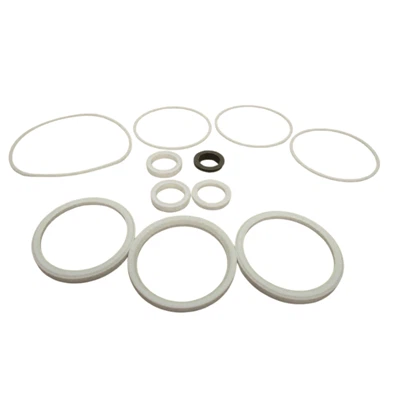
Modified PTFE (Polytetrafluoroethylene) sheets have gained significant popularity across various industries due to their enhanced performance compared to standard PTFE. One of the critical factors determining their suitability for specific applications is the minimum temperature they can withstand. As a prominent supplier of Modified PTFE sheets, I am often asked about this crucial characteristic. In this blog, I will delve into the details of the minimum temperature tolerance of Modified PTFE sheets, exploring the factors that influence it and how it impacts different applications.
Understanding Modified PTFE
Before we discuss the minimum temperature, it's essential to understand what Modified PTFE is. PTFE is a well - known fluoropolymer with excellent chemical resistance, low friction, and high thermal stability. However, standard PTFE has some limitations in certain applications, such as relatively low mechanical strength and creep resistance. Modified PTFE is created by adding fillers or using chemical modification techniques to enhance its properties.


There are different types of Modified PTFE products available. For instance, Filled Modified PTFE Product involves adding various fillers like glass fiber, carbon fiber, bronze, or graphite to improve mechanical strength, wear resistance, and dimensional stability. Modified PTFE EZ is a specialized type with unique processing advantages and performance enhancements. Chemically Modified PTFE is treated at a molecular level to achieve specific properties that are not attainable with standard PTFE.
Minimum Temperature Tolerance of Modified PTFE Sheets
The minimum temperature that Modified PTFE sheets can withstand depends on several factors, including the type of modification, the specific filler or chemical treatment used, and the intended application requirements.
In general, standard PTFE can operate at temperatures as low as - 268°C (-450°F). However, the addition of fillers or chemical modifications can have both positive and negative impacts on the low - temperature performance.
Impact of Fillers
When fillers are added to PTFE, the low - temperature performance can change. For example, glass fiber - filled Modified PTFE sheets typically maintain good mechanical properties at low temperatures. Glass fiber helps to reinforce the PTFE matrix, reducing the tendency for the material to become brittle at cold temperatures. These sheets can often withstand temperatures down to - 200°C (-328°F) while still retaining sufficient strength and toughness for applications such as cryogenic seals and gaskets.
Carbon fiber - filled Modified PTFE also shows excellent low - temperature performance. Carbon fiber has high strength and stiffness, which can enhance the overall structural integrity of the PTFE sheet at low temperatures. These sheets can be used in aerospace and automotive applications where components need to function in extremely cold environments, often with a minimum temperature tolerance of around - 180°C (-292°F).
On the other hand, some fillers may have a negative impact on low - temperature performance if not carefully selected. For example, certain types of polymers used as fillers may become brittle at low temperatures, which can lead to cracking and failure of the Modified PTFE sheet.
Chemical Modification
Chemically modified PTFE can be tailored to have specific low - temperature properties. Some chemical modifications can improve the flexibility and toughness of PTFE at low temperatures. For instance, by introducing certain functional groups, the intermolecular forces within the PTFE can be adjusted, allowing the material to remain more pliable at cold temperatures. Chemically modified PTFE sheets can sometimes achieve a minimum temperature tolerance close to that of standard PTFE, around - 260°C (-436°F), making them suitable for high - end cryogenic applications.
Applications at Low Temperatures
The ability of Modified PTFE sheets to withstand low temperatures makes them suitable for a wide range of applications in cold environments.
Cryogenic Industry
In the cryogenic industry, where temperatures can reach extremely low levels, Modified PTFE sheets are used for seals, gaskets, and insulation materials. For example, in liquefied natural gas (LNG) storage and transportation systems, seals made from glass fiber - filled Modified PTFE can prevent leaks at temperatures as low as - 162°C (-260°F). The low - temperature flexibility and chemical resistance of these sheets ensure reliable performance in maintaining the integrity of the cryogenic systems.
Aerospace
Aerospace applications often involve exposure to cold temperatures, especially during high - altitude flights or space missions. Modified PTFE sheets are used in various components such as actuators, valves, and electrical insulation. Carbon fiber - filled Modified PTFE can be used in valve seats, where it needs to withstand the extreme cold of the upper atmosphere while providing a tight seal.
Automotive
In automotive applications, particularly in cold climates, Modified PTFE sheets can be used for seals in fuel systems, brake systems, and engine components. For example, chemically modified PTFE seals can prevent fuel leakage in cold weather conditions, ensuring the proper functioning of the vehicle.
Testing and Quality Assurance
As a supplier of Modified PTFE sheets, we understand the importance of ensuring that our products meet the required low - temperature performance standards. We conduct rigorous testing on our Modified PTFE sheets to determine their minimum temperature tolerance.
Our testing procedures include subjecting the sheets to a range of low - temperature environments in specialized chambers. We measure various properties such as tensile strength, elongation, and hardness at different temperatures to assess the material's performance. This data allows us to provide accurate information to our customers about the minimum temperature that our Modified PTFE sheets can withstand.
Conclusion and Call to Action
In conclusion, the minimum temperature that Modified PTFE sheets can withstand varies depending on the type of modification, filler, or chemical treatment used. Our company offers a wide range of Modified PTFE sheets with different low - temperature performance characteristics to meet the diverse needs of various industries.
If you are in need of Modified PTFE sheets for applications in cold environments, we encourage you to contact us for more information. Our team of experts can help you select the right product based on your specific requirements. Whether you need a sheet for cryogenic, aerospace, or automotive applications, we have the solution for you. Let's start a discussion to find the best Modified PTFE sheet for your project.
References
- "Handbook of Fluoropolymers" by Harry A. Sarjeant
- "Polytetrafluoroethylene (PTFE) and Its Modifications" in Journal of Polymer Science