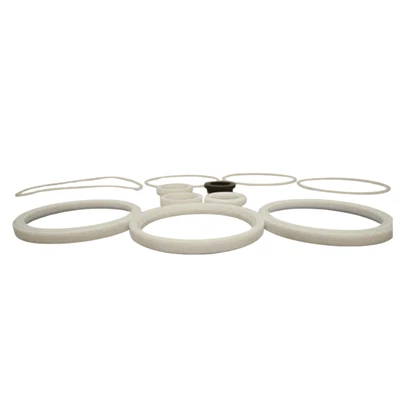
Hey there! As a supplier of RPTFE C Graphite, I often get asked about the aging resistance of this material when it's exposed to sunlight. So, let's dive right into it and break down what's going on with RPTFE C Graphite under the sun.


First off, what is RPTFE C Graphite? RPTFE stands for Reinforced Polytetrafluoroethylene. It's a high - performance material that combines the excellent properties of PTFE with additional reinforcement. You can learn more about RPTFE Teflon here. The 'C Graphite' part indicates that graphite is used as a filler or additive in the material. Graphite brings some unique properties to the table, like good thermal conductivity and lubricity.
Now, let's talk about sunlight and how it affects materials. Sunlight contains different types of radiation, mainly ultraviolet (UV) rays, visible light, and infrared (IR) rays. UV rays are the ones that usually cause the most problems when it comes to material aging. They have enough energy to break chemical bonds in polymers, which can lead to a whole bunch of issues like discoloration, cracking, and a decrease in mechanical properties.
When it comes to RPTFE C Graphite, its aging resistance in sunlight is quite interesting. RPTFE itself has some natural resistance to UV radiation. The PTFE base has a very stable molecular structure, and the carbon - fluorine bonds are quite strong. This gives it a certain level of protection against the harmful effects of UV rays. However, the addition of graphite can have both positive and negative impacts on its aging resistance.
On the positive side, graphite can act as a UV absorber. It can absorb some of the UV energy and convert it into heat, which is then dissipated. This reduces the amount of UV energy that reaches the polymer matrix and helps to protect the RPTFE from UV - induced degradation. Graphite also has good thermal conductivity, which means that it can quickly transfer the heat generated by UV absorption away from the material, preventing overheating and further damage.
But there are also some potential negative aspects. Graphite can sometimes act as a catalyst for oxidation reactions in the presence of sunlight. If the graphite is not properly dispersed in the RPTFE matrix, it can create sites where oxygen can react with the polymer chains, leading to oxidation and degradation. Also, if the graphite particles are too large or not well - bonded to the RPTFE, they can create stress concentrations in the material, which can make it more prone to cracking under the influence of sunlight and other environmental factors.
To evaluate the aging resistance of RPTFE C Graphite in sunlight, we usually conduct accelerated aging tests. These tests involve exposing samples of the material to high - intensity UV light for a certain period of time, simulating years of real - world sunlight exposure in a relatively short time. We then measure various properties of the material, such as its mechanical strength, hardness, and color, before and after the aging test.
In our experience, RPTFE C Graphite generally shows good aging resistance in sunlight compared to many other polymers. After long - term exposure to sunlight, we've found that the material retains a significant portion of its mechanical properties. For example, its tensile strength and elongation at break don't decrease dramatically. However, there is usually some discoloration, which is mainly due to the oxidation of the graphite and the polymer matrix.
The RPTFE High Temperature properties here also play a role in its aging resistance in sunlight. Since sunlight can heat up the material, having good high - temperature resistance means that the RPTFE C Graphite can withstand the elevated temperatures without significant degradation. This is an important factor, especially in hot and sunny climates.
Another aspect to consider is the surface finish of the RPTFE C Graphite. A smooth surface finish can help to reduce the absorption of sunlight and prevent the accumulation of dirt and debris, which can also contribute to aging. On the other hand, a rough surface can trap UV rays and moisture, accelerating the aging process.
If you're in an industry that requires materials to be exposed to sunlight for long periods, RPTFE C Graphite could be a great choice. It offers a good balance between aging resistance, mechanical properties, and other useful features like chemical resistance and low friction. You can find more information about the RPTFE Material here.
So, if you're thinking about using RPTFE C Graphite for your project, don't hesitate to reach out. Whether you need it for outdoor applications, high - temperature environments, or any other situation where sunlight exposure is a concern, we can provide you with the right product and technical support. We're always happy to discuss your specific needs and help you find the best solution.
In conclusion, RPTFE C Graphite has a decent aging resistance in sunlight. While it's not completely immune to the effects of UV radiation and sunlight, its unique combination of properties makes it a reliable choice for many applications. If you're interested in learning more or placing an order, just get in touch. We're here to make sure you get the best RPTFE C Graphite products for your business.
References
- Textbooks on polymer science and material aging
- Internal research reports on RPTFE C Graphite aging tests