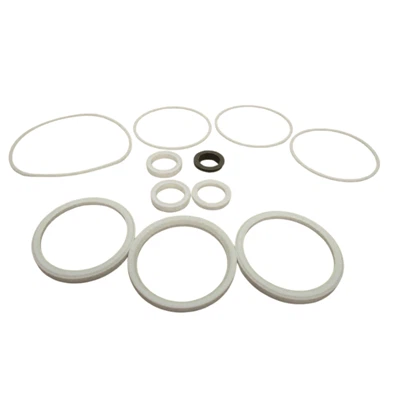
Hey there! As a supplier of RPTFE seals, I've seen firsthand how the flexibility of these seals can have a huge impact on their installation and use. In this blog, I'm gonna break down what makes RPTFE seals so flexible and how that flexibility affects their performance in different applications.


What is RPTFE?
First things first, let's talk about what RPTFE is. RPTFE stands for Reinforced Polytetrafluoroethylene. It's a high - performance material that combines the excellent chemical resistance and low friction properties of PTFE with added reinforcement to improve its mechanical strength. The reinforcement can come in various forms, like glass fibers, carbon fibers, or other fillers.
The Flexibility Factor
One of the key features of RPTFE seals is their flexibility. This flexibility is a game - changer in many ways. It allows the seals to conform to irregular surfaces, which is super important in a lot of industrial applications.
During Installation
When it comes to installing RPTFE seals, their flexibility makes the process a whole lot easier. Unlike some rigid seals that need a perfectly flat and smooth surface to work, RPTFE seals can adapt to minor surface imperfections. For example, if you're installing a RPTFE Seal in a pipe joint where the mating surfaces aren't completely even, the seal can bend and flex to fill the gaps. This means less time spent on surface preparation and a quicker installation process.
Another advantage during installation is that the flexibility of RPTFE seals reduces the risk of damage. Rigid seals can crack or break if they're not installed just right, but RPTFE seals can withstand a bit of rough handling. You can stretch, bend, and position them without worrying too much about them getting damaged. This is especially useful in tight spaces where you might need to maneuver the seal into place.
In Use
Once the RPTFE seals are installed, their flexibility continues to play a crucial role. In dynamic applications, such as in pumps or rotating equipment, the seals need to be able to move and flex with the machinery. The flexibility of RPTFE seals allows them to maintain a good seal even as the equipment vibrates or experiences slight movements. This helps prevent leaks and ensures the long - term performance of the equipment.
For example, in a RPTFE Ball Cone, the flexibility allows it to adapt to the movement of the ball and cone components. As the ball rotates or moves within the cone, the seal can flex and adjust to keep the seal intact. This is essential for applications where a reliable seal is needed to prevent the leakage of fluids or gases.
Applications and Flexibility
RPTFE seals are used in a wide range of industries, and their flexibility makes them suitable for many different applications.
Chemical Industry
In the chemical industry, where there are often harsh chemicals and high - pressure environments, the flexibility of RPTFE seals is a major advantage. The seals can adapt to the expansion and contraction of pipes and equipment due to temperature changes. For instance, in a chemical processing plant, a RPTFE Gasket can be used to seal a flange joint. The gasket's flexibility allows it to maintain a tight seal even when the pipes expand or contract due to the heat generated during the chemical reactions.
Food and Beverage Industry
In the food and beverage industry, hygiene is of utmost importance. RPTFE seals are often used because they are non - toxic and can be easily cleaned. Their flexibility allows them to be installed in equipment with complex shapes, such as in filling machines or mixing tanks. The seals can conform to the contours of the equipment, ensuring a tight seal and preventing the contamination of food and beverages.
Limitations and Considerations
While the flexibility of RPTFE seals is a great advantage, there are also some limitations to keep in mind. In extremely high - pressure applications, the flexibility might cause the seal to extrude if it's not properly supported. This can lead to seal failure and leakage. So, in high - pressure situations, additional support structures or proper design considerations are necessary.
Also, over - flexing the seal during installation or use can cause wear and tear over time. It's important to handle the seals with care and follow the manufacturer's installation guidelines to ensure their long - term performance.
Conclusion
In conclusion, the flexibility of RPTFE seals is a major asset in their installation and use. It makes the installation process easier, allows the seals to adapt to different surfaces and conditions, and ensures a reliable seal in a variety of applications. Whether you're in the chemical industry, food and beverage industry, or any other industry that requires high - performance seals, RPTFE seals are a great choice.
If you're interested in learning more about our RPTFE seals or are looking to make a purchase, don't hesitate to reach out. We're here to help you find the right seal for your specific needs.
References
- "Handbook of Seal Technology" by John H. Bickford
- "Sealing Technology for Engineers" by Neil G. Leach