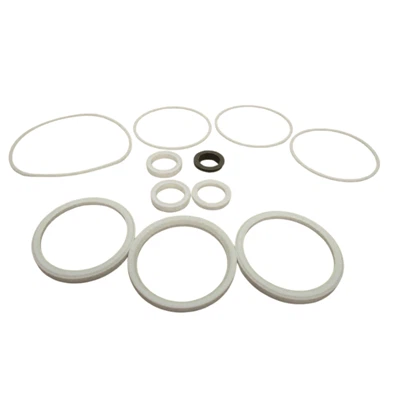
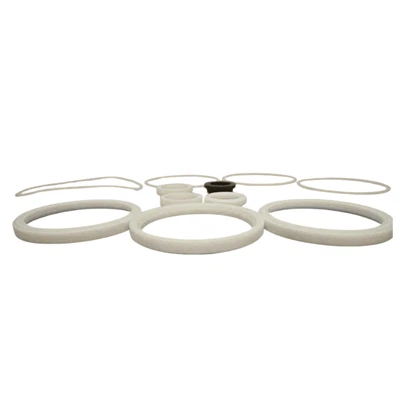
When it comes to the performance of valves in various industrial applications, the choice of materials plays a pivotal role. One such material that has gained significant attention in the valve industry is Reinforced Polytetrafluoroethylene (RPTFE). As a leading supplier of RPTFE in Valve, I am often asked about the creep resistance of RPTFE in valves. In this blog, I will delve into the concept of creep resistance, its importance in valve applications, and how RPTFE fares in this regard.
Understanding Creep Resistance
Creep is a time - dependent deformation that occurs in materials under a constant load at elevated temperatures. In the context of valves, creep can be a critical issue. Valves are often subjected to continuous pressure and temperature variations during their operation. If the material used in the valve components has poor creep resistance, it may gradually deform over time. This deformation can lead to leakage, reduced valve performance, and even complete valve failure.
Creep resistance, therefore, refers to a material's ability to resist this time - dependent deformation. A material with high creep resistance will maintain its shape and dimensions under a constant load, ensuring the long - term reliability and functionality of the valve.
Why Creep Resistance Matters in Valves
In industrial settings, valves are responsible for controlling the flow of fluids, gases, and other substances. Any change in the shape or size of valve components due to creep can have serious consequences. For example, in a high - pressure pipeline system, a small amount of creep in the valve seat or seal can result in leakage. This not only leads to loss of the transported substance but can also pose safety risks, especially if the substance is hazardous.
In high - temperature applications, such as in power plants or chemical processing industries, the problem of creep is exacerbated. The elevated temperatures increase the rate of creep, making the choice of a material with high creep resistance even more crucial.
RPTFE: A Material with Excellent Creep Resistance
Reinforced Polytetrafluoroethylene (RPTFE) is a composite material made by combining PTFE (Teflon) with reinforcing fillers. RPTFE Teflon has several properties that make it an ideal choice for valve applications, and its creep resistance is one of its most significant advantages.
The Role of Reinforcing Fillers
The addition of reinforcing fillers to PTFE is what enhances its creep resistance. Common fillers used in RPTFE include glass fibers, carbon fibers, and bronze powder. These fillers act as a skeletal structure within the PTFE matrix, providing additional strength and stiffness. When a load is applied to the RPTFE, the fillers help to distribute the stress more evenly, reducing the likelihood of creep deformation.
For instance, glass fiber - reinforced RPTFE has been shown to have significantly improved creep resistance compared to unfilled PTFE. The glass fibers act as a reinforcement, preventing the PTFE molecules from sliding past each other under load, which is the primary mechanism of creep in PTFE.
High - Temperature Performance
One of the key factors that influence creep is temperature. As the temperature increases, the rate of creep in materials also increases. However, RPTFE High Temperature performance is remarkable. It can maintain its mechanical properties, including creep resistance, over a wide range of temperatures.
RPTFE can withstand temperatures up to 260°C (500°F) without significant degradation in its creep resistance. This makes it suitable for use in high - temperature valve applications, such as in the oil and gas industry, where valves are exposed to high - temperature fluids and gases during extraction, processing, and transportation.
Testing and Evaluation of RPTFE Creep Resistance
To ensure the quality and reliability of RPTFE in valve applications, extensive testing and evaluation of its creep resistance are carried out. These tests typically involve subjecting RPTFE samples to a constant load at a specific temperature for a predetermined period. The deformation of the samples is then measured at regular intervals.
The results of these tests are used to determine the creep rate of RPTFE under different conditions. This information is crucial for valve designers and engineers, as it allows them to select the appropriate RPTFE grade for a specific valve application based on the expected load and temperature conditions.
Applications of RPTFE in Valves
The excellent creep resistance of RPTFE makes it suitable for a wide range of valve applications. Some of the common applications include:
Ball Valves
In ball valves, RPTFE is often used for the seat and seal components. The high creep resistance of RPTFE ensures that the seat and seal maintain their shape and integrity over time, providing a tight seal and preventing leakage. This is particularly important in applications where a high - pressure and high - temperature fluid needs to be controlled.
Butterfly Valves
Butterfly valves also benefit from the use of RPTFE. The valve disc and seat can be made of RPTFE, which offers excellent wear resistance and low friction in addition to its high creep resistance. This allows for smooth operation and long - term reliability of the butterfly valve.
Check Valves
Check valves are designed to allow fluid to flow in one direction only. RPTFE can be used for the valve seat and disc in check valves, where its creep resistance ensures that the valve functions properly even under high - pressure and high - temperature conditions.
Advantages of Choosing Our RPTFE for Valves
As a supplier of RPTFE in valves, we take pride in offering high - quality RPTFE products. Our RPTFE is manufactured using the latest technology and strict quality control measures to ensure consistent and excellent creep resistance.
We offer a wide range of RPTFE grades, each tailored to specific valve applications. Whether you need RPTFE for a high - pressure, high - temperature valve or a valve in a more moderate operating environment, we have the right product for you.


In addition to our high - quality products, we also provide excellent customer service. Our team of experts is available to assist you in selecting the appropriate RPTFE grade for your valve application, and we can also provide technical support throughout the installation and operation of your valves.
Contact Us for Your RPTFE Valve Needs
If you are in the market for RPTFE for your valve applications, we invite you to contact us. We are committed to providing you with the best - quality RPTFE products and services. Whether you are a valve manufacturer, an engineer, or a procurement professional, our team is ready to work with you to meet your specific requirements.
References
- "Engineering Properties of Polytetrafluoroethylene and Related Fluoropolymers" by John A. Brydson.
- "Valve Handbook" by Robert W. McKetta.
- Technical reports on RPTFE performance from industry research institutions.