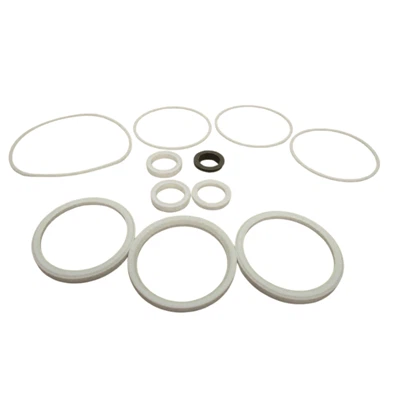
In the world of industrial materials, the choice of seat material for valves and other critical components is a decision that can significantly impact performance, longevity, and cost. As a supplier of RPTFE (Reinforced Polytetrafluoroethylene) Seat Material, I've witnessed firsthand the growing interest in this remarkable material and the questions that often arise regarding its cost compared to other alternatives. In this blog post, we'll delve into the cost dynamics of RPTFE Seat Material, exploring how it stacks up against other common materials in various applications.
Understanding RPTFE Seat Material
Before we dive into the cost comparison, let's take a moment to understand what RPTFE Seat Material is and why it's gaining popularity. RPTFE is a composite material that combines the exceptional chemical resistance and low friction properties of PTFE with the added strength and dimensional stability provided by reinforcement fillers. This makes it an ideal choice for applications where harsh chemicals, high pressures, and extreme temperatures are present.
The unique properties of RPTFE make it suitable for a wide range of industries, including chemical processing, oil and gas, pharmaceuticals, and food and beverage. In valve applications, RPTFE seats offer excellent sealing performance, reducing the risk of leaks and improving overall system efficiency. For more information on the use of RPTFE in valves, you can visit RPTFE in Valve.
Cost Factors of RPTFE Seat Material
When considering the cost of RPTFE Seat Material, it's important to take into account several factors that can influence the overall price. These factors include:
- Raw Material Costs: The cost of the base PTFE resin and the reinforcement fillers used in RPTFE can vary depending on market conditions and the quality of the materials. Additionally, the manufacturing process for RPTFE can be more complex than that of other materials, which can also contribute to higher costs.
- Manufacturing Complexity: RPTFE Seat Material requires specialized manufacturing techniques to ensure the proper dispersion of the reinforcement fillers and the formation of a uniform structure. This can involve additional processing steps and equipment, which can increase the cost of production.
- Performance and Durability: RPTFE Seat Material offers superior performance and durability compared to many other materials. It has excellent chemical resistance, low friction, and high temperature resistance, which can result in longer service life and reduced maintenance costs. While the initial cost of RPTFE may be higher, the long-term savings can often outweigh the upfront investment.
Cost Comparison with Other Materials
Now, let's compare the cost of RPTFE Seat Material with other common materials used in valve applications, such as rubber, metal, and other plastics.
Rubber
Rubber is a widely used material for valve seats due to its low cost and good sealing properties. However, rubber has limited chemical resistance and can degrade over time when exposed to harsh chemicals or high temperatures. In contrast, RPTFE Seat Material offers excellent chemical resistance and can withstand a wide range of temperatures, making it a more suitable choice for demanding applications. While the initial cost of RPTFE may be higher than rubber, the longer service life and reduced maintenance requirements can result in significant cost savings over time.
Metal
Metal seats are often used in high-pressure and high-temperature applications where durability and strength are critical. However, metal seats can be prone to corrosion and wear, which can lead to leaks and reduced performance. RPTFE Seat Material offers excellent corrosion resistance and low friction, which can help to extend the service life of the valve and reduce the risk of leaks. Additionally, RPTFE seats can provide a better seal than metal seats, which can improve the overall efficiency of the system. While the cost of RPTFE may be higher than metal in some cases, the long-term benefits can justify the investment.
Other Plastics
There are several other plastics that are commonly used for valve seats, such as polypropylene, polyethylene, and nylon. These materials offer good chemical resistance and low cost, but they may not have the same level of performance and durability as RPTFE. RPTFE Seat Material offers superior chemical resistance, low friction, and high temperature resistance, which can make it a more suitable choice for applications where harsh chemicals or extreme temperatures are present. While the cost of RPTFE may be higher than other plastics, the long-term savings can often outweigh the upfront investment.


Real-World Examples
To illustrate the cost savings of using RPTFE Seat Material, let's consider a real-world example. A chemical processing plant was experiencing frequent valve failures due to the corrosion and wear of the metal seats. The plant was using a metal seat valve in a high-pressure, high-temperature application where harsh chemicals were present. The metal seats were failing within a few months, resulting in costly downtime and maintenance.
After consulting with our team, the plant decided to switch to RPTFE Seat Material. The RPTFE seats were installed in the valves, and the plant immediately noticed a significant improvement in performance. The RPTFE seats provided a better seal, reducing the risk of leaks and improving the overall efficiency of the system. Additionally, the RPTFE seats were able to withstand the harsh chemicals and high temperatures, resulting in a longer service life and reduced maintenance costs.
Over the course of a year, the plant was able to save thousands of dollars in maintenance and downtime costs. The initial investment in the RPTFE Seat Material was quickly recouped, and the plant was able to enjoy the long-term benefits of using a high-performance material.
Conclusion
In conclusion, the cost of RPTFE Seat Material compared to other materials can vary depending on several factors, including raw material costs, manufacturing complexity, and performance and durability. While the initial cost of RPTFE may be higher than some other materials, the long-term savings can often outweigh the upfront investment. RPTFE Seat Material offers superior performance and durability, which can result in longer service life, reduced maintenance costs, and improved system efficiency.
If you're considering using RPTFE Seat Material for your valve applications, I encourage you to contact us to learn more about our products and services. We have a team of experts who can help you determine the best material for your specific needs and provide you with a competitive quote. To learn more about RPTFE Material, you can visit RPTFE Material. And if you're interested in our RPTFE Seat Material, you can visit RPTFE Seat Material.
References
- "Valve Seat Materials: A Comprehensive Guide" - Valve Magazine
- "The Properties and Applications of RPTFE" - Polymer Science Journal
- "Cost-Benefit Analysis of RPTFE Seat Material in Industrial Applications" - Industrial Engineering Review