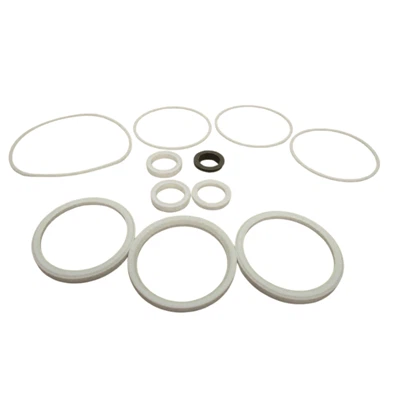
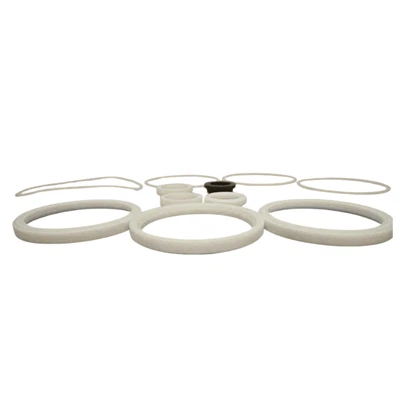
What's up, folks! I'm an RP TFE gasket supplier, and today I wanna chat about something super important in the world of gaskets: the creep relaxation of RP TFE gaskets.
First off, let's get into what RP TFE gaskets are. RP TFE stands for Reinforced Polytetrafluoroethylene. These gaskets are pretty awesome because they combine the chemical resistance and low friction properties of PTFE with the added strength and stability of a reinforcement. This makes them a top - choice for a wide range of applications, from chemical processing plants to food and beverage industries.
Now, onto creep relaxation. Creep relaxation is a phenomenon that all gaskets go through. Picture this: you install an RP TFE gasket between two flanges and tighten the bolts to a specific torque. Initially, the gasket is compressed, creating a tight seal that keeps fluids or gases from leaking. But over time, and under the influence of factors like temperature, pressure, and the material's own properties, the gasket starts to change.
Creep is the gradual deformation of the gasket under a constant load. It's like when you put a heavy book on a soft cushion. Over time, the cushion gets squished down and doesn't bounce back to its original shape right away. In the case of RP TFE gaskets, as they creep, they lose some of their thickness. This can lead to a reduction in the contact pressure between the gasket and the flanges.
Relaxation, on the other hand, is the decrease in stress over time while the strain (deformation) remains constant. In simpler terms, even if the gasket doesn't change its shape much more, the pressure it's applying to the flanges to create a seal starts to drop.
So, why does creep relaxation matter? Well, it directly affects the sealing performance of the RP TFE gasket. As the contact pressure decreases due to creep relaxation, there's a higher risk of leakage. In an industrial setting, this can be a huge problem. Leakage can lead to loss of product, pollution, and even safety hazards. For example, in a chemical plant, a leak of a hazardous chemical can endanger the lives of workers and damage the environment.
Now, let's talk about what factors influence the creep relaxation of RP TFE gaskets.
Temperature is a biggie. Higher temperatures generally increase the rate of creep relaxation. At elevated temperatures, the molecules in the PTFE material become more active, and it's easier for them to move around and rearrange themselves. This causes the gasket to deform more quickly and lose its sealing pressure. For instance, if you're using an RP TFE gasket in a high - temperature steam line, you need to be extra cautious about creep relaxation.
Pressure also plays a significant role. The higher the pressure applied to the gasket, the more likely it is to creep. When there's a lot of pressure on the gasket, it's under more stress, and the material is more likely to deform over time.
The type of reinforcement in the RP TFE gasket can also affect creep relaxation. Different reinforcements have different mechanical properties. Some reinforcements are better at resisting deformation than others. A good reinforcement can help hold the shape of the gasket and reduce the rate of creep relaxation.
As a supplier, I know how crucial it is to offer gaskets that have low creep relaxation. That's why we've developed a range of high - quality RP TFE gaskets, like the TG - 1801, TG - 1802, and TG - 1800. These gaskets are designed with the latest technology to minimize creep relaxation and provide long - lasting sealing performance.
Our engineers work hard to select the right combination of PTFE material and reinforcement. We test our gaskets under various conditions to ensure that they can withstand different temperatures and pressures without significant creep relaxation.
When you're choosing an RP TFE gasket for your application, it's important to consider the specific requirements of your system. You need to know the temperature range, the pressure levels, and the type of fluid or gas that the gasket will be sealing. If you're not sure, don't worry! Our team of experts is here to help. We can provide you with detailed information and recommendations based on your needs.


If you're in the market for high - quality RP TFE gaskets with low creep relaxation, don't hesitate to reach out. Whether you're a small business or a large industrial plant, we've got the right gasket for you. We believe in providing top - notch products and excellent customer service. So, if you wanna learn more about our products or have any questions about creep relaxation or anything related to gaskets, just contact us. We're looking forward to working with you and helping you find the perfect sealing solution for your needs.
References
- "Sealing Technology Handbook", by John Adamson
- "Plastics in Sealing Applications", by Paul Harris
- Industry research reports on PTFE gasket performance