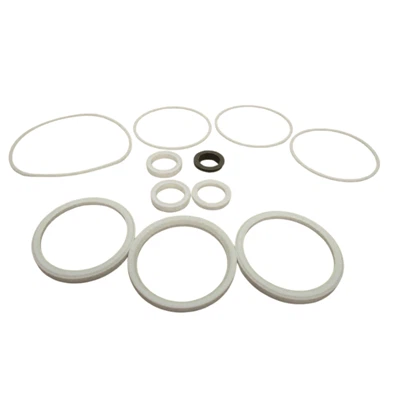
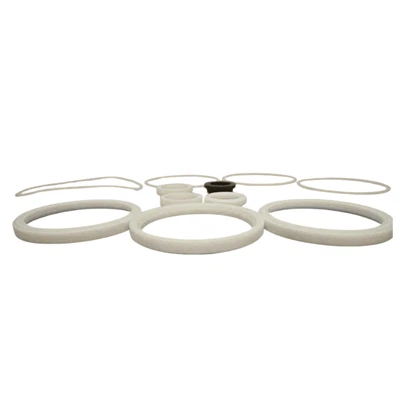
As a supplier of RPTFE C Graphite, ensuring the highest quality of our products is not just a goal but a commitment. Quality control measures are the backbone of our production process, guaranteeing that our RPTFE C Graphite meets and exceeds industry standards. In this blog, I will delve into the comprehensive quality control measures we implement throughout the production of RPTFE C Graphite.


Raw Material Inspection
The quality of RPTFE C Graphite starts with the raw materials. We source our raw materials from trusted suppliers who adhere to strict quality standards. Before any raw material is used in production, it undergoes a thorough inspection. This includes checking the chemical composition, particle size, and purity of the materials. For example, the graphite used in our RPTFE C Graphite must have a high carbon content and low levels of impurities. Any raw material that does not meet our specifications is rejected.
In - process Quality Control
During the production process, we have multiple stages of quality control. The mixing of RPTFE and graphite is a critical step. We use precise mixing equipment to ensure a homogeneous blend. Continuous monitoring of the mixing process is carried out to maintain the correct ratio of RPTFE to graphite. Temperature and pressure are also closely controlled during the molding process. Deviations in these parameters can affect the physical and mechanical properties of the final product.
We use advanced sensors and monitoring systems to track the production process in real - time. These systems can detect any anomalies and trigger immediate corrective actions. For instance, if the temperature during the sintering process exceeds the set limit, the system will automatically adjust the heating elements to bring the temperature back to the optimal range.
Physical and Chemical Testing
After the production of RPTFE C Graphite, a series of physical and chemical tests are conducted. Physical tests include measuring the density, hardness, and tensile strength of the product. These tests help us ensure that the RPTFE C Graphite has the desired mechanical properties. Chemical tests, on the other hand, are used to analyze the chemical composition of the product. This is important to verify that there are no unwanted chemical reactions during the production process and that the product meets the required chemical specifications.
For example, we use X - ray diffraction (XRD) to analyze the crystal structure of the RPTFE C Graphite. This helps us understand the molecular arrangement and identify any potential structural defects. Additionally, we perform thermal analysis to determine the thermal stability of the product.
Dimensional Inspection
Accurate dimensions are crucial for the proper functioning of RPTFE C Graphite in various applications. We use precision measuring tools such as calipers, micrometers, and coordinate measuring machines (CMM) to ensure that the products meet the specified dimensions. Any product that does not fall within the acceptable dimensional tolerance is either re - worked or discarded.
Performance Testing
To ensure that our RPTFE C Graphite performs well in real - world applications, we conduct performance testing. This includes testing the product's resistance to corrosion, wear, and high temperatures. For example, we simulate harsh chemical environments to evaluate the corrosion resistance of the RPTFE C Graphite. We also test the product's wear resistance by subjecting it to abrasive materials under controlled conditions.
Quality Assurance Documentation
We maintain detailed quality assurance documentation for each batch of RPTFE C Graphite produced. This documentation includes information about the raw materials used, production process parameters, test results, and inspection records. This documentation serves as a traceability tool, allowing us to track the history of each product and provide customers with detailed information about the quality of the product.
Supplier Auditing
In addition to in - house quality control measures, we also conduct regular audits of our raw material suppliers. This helps us ensure that they continue to meet our quality standards. During these audits, we review the supplier's manufacturing processes, quality control systems, and documentation. We also conduct on - site inspections to verify the supplier's compliance with our requirements.
Continuous Improvement
Quality control is an ongoing process, and we are constantly looking for ways to improve our production processes and quality control measures. We collect feedback from customers and use it to identify areas for improvement. We also invest in research and development to develop new and improved quality control techniques.
Applications of RPTFE C Graphite
RPTFE C Graphite has a wide range of applications. It is commonly used in the valve industry. You can learn more about RPTFE in Valve. The unique properties of RPTFE C Graphite, such as its high chemical resistance and low friction coefficient, make it an ideal material for valve seals.
It is also suitable for low - temperature applications. For more information on RPTFE Low Temperature, you can visit the provided link. In low - temperature environments, RPTFE C Graphite maintains its mechanical properties and provides reliable performance.
Moreover, RPTFE Teflon is another related product with similar applications. RPTFE Teflon combines the advantages of RPTFE and Teflon, offering excellent chemical resistance and high - temperature stability.
Conclusion
In conclusion, the quality control measures for RPTFE C Graphite production are comprehensive and multi - faceted. From raw material inspection to performance testing, every step of the production process is carefully monitored to ensure the highest quality of the final product. Our commitment to quality is what sets us apart as a reliable supplier of RPTFE C Graphite.
If you are interested in purchasing RPTFE C Graphite or have any questions about our products, please feel free to contact us for a detailed discussion. We are always ready to provide you with the best quality products and services.
References
- ASTM International standards for plastics and carbon - based materials.
- Industry research reports on RPTFE and graphite composites.
- Technical literature from leading manufacturers of RPTFE and related materials.