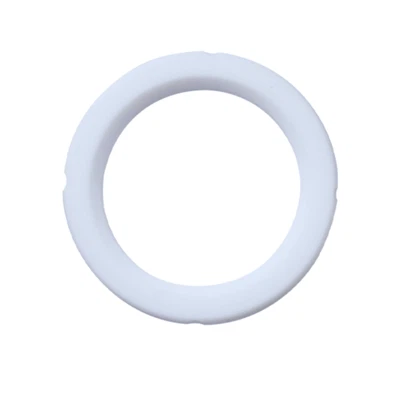
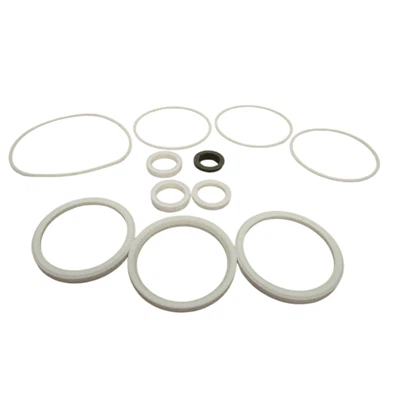
Hey there! As a supplier of RPTFE Ball Cone, I've been getting a lot of questions lately about the pressure drop characteristics of these nifty little components. So, I thought I'd take a deep dive into this topic and share what I've learned over the years.
First off, let's quickly go over what RPTFE is. RPTFE stands for Reinforced Polytetrafluoroethylene. It's a super - versatile material that combines the excellent chemical resistance and low friction properties of PTFE with added reinforcement to improve its mechanical strength. This makes it a top choice for all sorts of sealing applications, including our RPTFE Ball Cone. You can learn more about RPTFE in general from our RPTFE Seal page.
Now, onto the pressure drop characteristics. Pressure drop is basically the difference in pressure between two points in a fluid - carrying system. In the case of our RPTFE Ball Cone, it's about how the fluid flow through or around the cone affects the pressure.
One of the key factors influencing the pressure drop of an RPTFE Ball Cone is its shape. The ball - cone design is quite unique. The spherical part at the top and the conical base work together to create a smooth flow path for the fluid. When the fluid enters the area around the RPTFE Ball Cone, it first encounters the rounded surface of the ball. This rounded shape helps to reduce the sudden changes in the flow direction, which in turn minimizes the formation of eddies and turbulence. Eddies and turbulence are major contributors to pressure drop because they cause energy losses in the fluid flow.
The conical part of the RPTFE Ball Cone also plays an important role. As the fluid moves down along the cone, the gradually changing cross - sectional area allows for a more controlled expansion or contraction of the fluid flow. This is crucial because rapid changes in cross - sectional area can lead to significant pressure drops. Our RPTFE Ball Cone is carefully designed to ensure that the conical angle and dimensions are optimized for the best possible flow characteristics and minimal pressure drop.
Another factor that affects the pressure drop is the surface finish of the RPTFE Ball Cone. RPTFE has a naturally low - friction surface, which is great for reducing the frictional resistance between the fluid and the cone. A smooth surface finish further enhances this effect. When the fluid flows over a smooth RPTFE surface, there are fewer interactions between the fluid molecules and the surface irregularities. This results in less energy being dissipated as heat due to friction, and thus a lower pressure drop.


The flow rate of the fluid is also a significant variable. At low flow rates, the pressure drop across the RPTFE Ball Cone is relatively small. The fluid can easily navigate around the cone with minimal disruption. However, as the flow rate increases, the pressure drop starts to rise. This is because at higher flow rates, the fluid has more kinetic energy, and the forces acting on the cone and the fluid itself become more complex. The ball - cone shape helps to manage these forces better than some other designs, but there's still an increase in pressure drop as the flow rate goes up.
The viscosity of the fluid is yet another important consideration. High - viscosity fluids, like thick oils, tend to experience a higher pressure drop compared to low - viscosity fluids, such as water. This is because high - viscosity fluids have more internal resistance to flow. The RPTFE Ball Cone has to work harder to guide the flow of these thick fluids, which leads to a greater loss of pressure.
Now, let's talk about how these pressure drop characteristics translate into real - world applications. In many industrial processes, maintaining a stable pressure is crucial for the proper functioning of equipment. For example, in a chemical processing plant, a consistent pressure is needed to ensure accurate mixing and reaction of chemicals. Our RPTFE Ball Cone can be used in pipelines and valves to control the fluid flow and minimize pressure fluctuations. By reducing the pressure drop, it helps to keep the system operating efficiently and reduces the energy consumption required to pump the fluid.
In the oil and gas industry, where fluids are often transported over long distances, the pressure drop characteristics of components like the RPTFE Ball Cone can have a significant impact on the overall efficiency of the pipeline system. A lower pressure drop means less energy is wasted in overcoming the resistance to flow, which can result in substantial cost savings over time.
We also offer RPTFE Gasket products that can be used in conjunction with the RPTFE Ball Cone in sealing applications. These gaskets further enhance the sealing performance and can also contribute to reducing the overall pressure drop in the system by preventing leaks.
So, if you're in the market for an RPTFE Ball Cone and are concerned about pressure drop characteristics, you're in the right place. Our team has years of experience in designing and manufacturing these components to meet the highest standards of performance. We can work with you to understand your specific requirements, whether it's a low - flow, high - viscosity application or a high - flow, low - viscosity one.
If you're interested in learning more or discussing a potential purchase, don't hesitate to reach out. We're here to answer all your questions and help you find the best RPTFE Ball Cone solution for your needs. Let's have a chat and see how we can make your fluid - handling system more efficient and reliable.
References
- "Fluid Mechanics" by Frank M. White
- "Chemical Process Equipment: Selection and Design" by Douglas M. Himmelblau and Joseph B. Riggs