Hey there! As a supplier of RPTFE Teflon, I often get asked about the differences between RPTFE Teflon and FEP. So, I thought I'd write this blog to clear things up and give you a better understanding of these two materials.
What's RPTFE Teflon Anyway?
First off, let's talk about RPTFE Teflon. RPTFE stands for Reinforced Polytetrafluoroethylene. It's a super - tough version of the well - known Teflon. Regular Teflon, or PTFE, is already pretty amazing. It's got a super - low friction coefficient, which means things slide over it easily. It's also highly resistant to chemicals and can handle a wide range of temperatures.
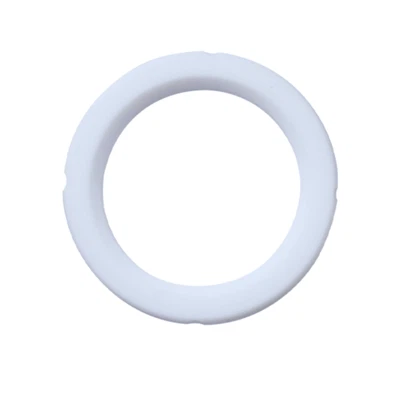
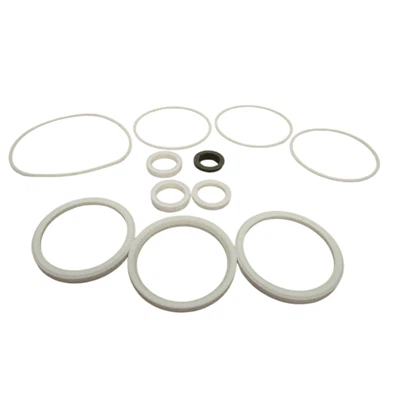
But RPTFE takes it a step further. By adding reinforcements like glass fibers, carbon fibers, or bronze powder, we make it even stronger and more durable. This reinforcement gives RPTFE better mechanical properties, such as higher wear resistance and improved dimensional stability. It can withstand more stress and pressure without deforming, making it ideal for applications where regular PTFE might not cut it. For example, in RPTFE in Valve applications, it can handle the high - pressure and high - flow conditions inside valves, providing a reliable seal and long - term performance.
All About FEP
Now, let's turn our attention to FEP, which stands for Fluorinated Ethylene Propylene. FEP is also a fluoropolymer, just like PTFE and RPTFE. It shares some similarities with them, such as excellent chemical resistance and a non - stick surface. But it also has some unique features.
One of the big differences is its melt - processability. FEP can be melted and molded using traditional plastic processing methods like injection molding and extrusion. This makes it much easier to manufacture complex shapes and parts compared to RPTFE Teflon. Regular PTFE and RPTFE are usually processed using techniques like compression molding because they don't melt in the traditional sense.
FEP also has a lower melting point compared to PTFE and RPTFE. Its melting point is around 260°C (500°F), while PTFE melts at about 327°C (621°F). This lower melting point means that FEP is more suitable for applications where lower processing temperatures are required.
Physical and Chemical Differences
Appearance
In terms of appearance, FEP is transparent or translucent, which can be a big advantage in applications where visibility is important. You can see through FEP parts, which is useful in things like sight glasses or certain types of tubing. On the other hand, RPTFE Teflon is usually opaque because of the added reinforcements. The reinforcements can also give it a more textured surface compared to the smooth surface of FEP.
Chemical Resistance
Both RPTFE Teflon and FEP have excellent chemical resistance. They can resist a wide range of chemicals, including acids, bases, and organic solvents. However, there are some minor differences. In some cases, RPTFE might have slightly better resistance to certain aggressive chemicals because of its reinforced structure. The reinforcements can act as a barrier, preventing the chemicals from penetrating the material as easily.


Thermal Properties
As mentioned earlier, FEP has a lower melting point. But when it comes to continuous service temperature, RPTFE Teflon can handle higher temperatures. RPTFE can typically operate continuously at temperatures up to 260°C (500°F), while FEP's continuous service temperature is usually around 200°C (392°F). So, if you need a material that can withstand high - temperature environments for long periods, RPTFE Teflon is the way to go.
Applications
RPTFE Teflon Applications
RPTFE Teflon is widely used in industries where high performance is required. In the automotive industry, it's used in gaskets, seals, and bearings. These parts need to withstand high pressures, temperatures, and friction, and RPTFE's mechanical strength and wear resistance make it a perfect choice.
In the chemical processing industry, RPTFE is used in pumps, valves, and pipes. It can handle the corrosive chemicals and high - pressure conditions in chemical plants. As I mentioned before, RPTFE in Valve is a common application, where it provides a tight seal and prevents leakage.
FEP Applications
FEP's melt - processability and transparency make it popular in the electronics industry. It's used in wire and cable insulation because it can be easily extruded onto wires. The transparency also allows for easy inspection of the wires inside.
In the food and beverage industry, FEP is used in non - stick coatings for cooking utensils and food processing equipment. Its non - stick surface makes it easy to clean, and its chemical resistance ensures that it won't react with food products.
Cost Considerations
When it comes to cost, there's a bit of a difference between RPTFE Teflon and FEP. Generally, RPTFE Teflon is more expensive. The cost of adding reinforcements and the more complex processing methods contribute to its higher price. However, in applications where its superior performance is necessary, the extra cost is often worth it.
FEP, on the other hand, is relatively more affordable, especially when considering the ease of processing. Its ability to be processed using traditional plastic manufacturing methods can reduce production costs, making it a cost - effective option for many applications.
Which One Should You Choose?
So, how do you decide between RPTFE Teflon and FEP? Well, it depends on your specific application. If you need a material with high mechanical strength, wear resistance, and the ability to handle high temperatures, then RPTFE Teflon is the better choice. It's great for heavy - duty applications in industries like automotive, chemical processing, and aerospace.
If you need a material that can be easily molded into complex shapes, has a lower processing temperature, and transparency is an advantage, then FEP is the way to go. It's suitable for applications in electronics, food processing, and other industries where these features are important.
Wrapping It Up and Invitation
I hope this blog has given you a clear understanding of the differences between RPTFE Teflon and FEP. As a supplier of RPTFE Teflon, I'm here to help you choose the right material for your needs. Whether you're working on a small - scale project or a large - scale industrial application, I can provide you with high - quality RPTFE Teflon products.
If you're interested in learning more or are thinking about making a purchase, don't hesitate to reach out. I'm happy to have a chat about your requirements and see how we can work together. Let's find the perfect solution for your project!
References
- "Handbook of Fluoropolymer Science and Technology"
- Industry reports on fluoropolymer applications in automotive, chemical, and electronics industries.