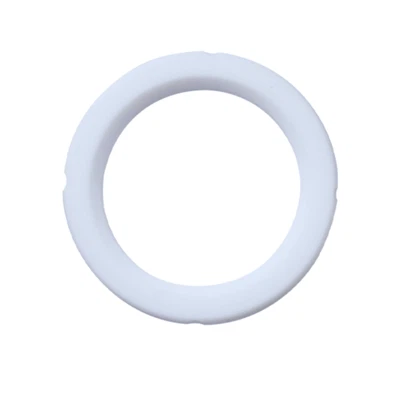
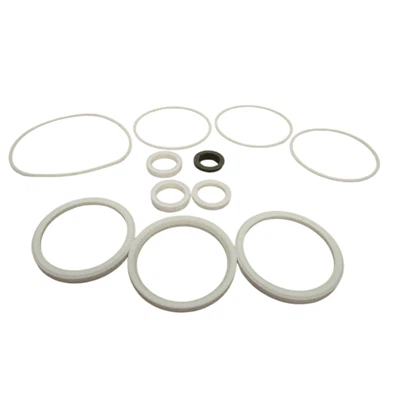
Hey there! As a supplier of rptfe seals, I often get asked about the radiation resistance properties of these seals. So, I thought I'd write a blog post to share some insights on this topic.
First off, let's talk about what rptfe is. RPTFE stands for Reinforced Polytetrafluoroethylene. It's a high - performance material that combines the excellent chemical resistance and low friction properties of PTFE with added reinforcement to enhance its mechanical strength.
Radiation can come in different forms, such as gamma rays, X - rays, and neutron radiation. These types of radiation can have a significant impact on the performance and integrity of materials. When it comes to rptfe seals, their radiation resistance is a crucial factor, especially in applications where they are exposed to high - energy radiation, like in nuclear power plants, space exploration, and some medical facilities.
How rptfe Seals Resist Radiation
The base material of rptfe, PTFE, has some inherent resistance to radiation. PTFE is a fluoropolymer, and the carbon - fluorine bonds in its molecular structure are very strong. These strong bonds make it more difficult for radiation to break down the polymer chains. When radiation interacts with a material, it can cause chain scission (breaking of the polymer chains), cross - linking (formation of new bonds between polymer chains), and the generation of free radicals. In PTFE, the strong carbon - fluorine bonds are relatively stable under radiation exposure, which means that the material doesn't degrade as quickly as some other polymers.
The reinforcement in rptfe also plays an important role in its radiation resistance. The reinforcement materials, which can be glass fibers, carbon fibers, or other high - strength materials, can help to maintain the mechanical integrity of the seal. When radiation causes some damage to the PTFE matrix, the reinforcement fibers can still hold the structure together, preventing the seal from losing its shape and sealing performance.
Performance Under Different Radiation Levels
At low levels of radiation, rptfe seals can maintain their properties for a long time. The material may experience some minor changes, such as a slight increase in hardness or a small decrease in elongation at break. But these changes are usually within an acceptable range, and the seal can still function properly.
However, at high levels of radiation, the situation gets a bit more complicated. The radiation can cause more significant damage to the PTFE matrix. The polymer chains may break down, leading to a loss of mechanical properties like tensile strength and flexibility. The reinforcement fibers can also be affected, although they are generally more resistant to radiation than the PTFE matrix.
In nuclear power plants, for example, rptfe seals are exposed to continuous low - level radiation over long periods. The seals need to maintain their sealing performance to prevent the leakage of radioactive materials. Our RPTFE Seal has been tested in simulated nuclear environments, and it has shown good long - term performance under these conditions.
Applications Benefiting from Radiation Resistance
- Nuclear Industry: As mentioned earlier, nuclear power plants rely on rptfe seals to prevent the leakage of radioactive substances. The seals are used in valves, pumps, and other equipment where a reliable seal is essential. Our RPTFE Gasket is a popular choice in this industry because of its excellent radiation resistance and sealing properties.
- Space Exploration: In space, there is a high level of cosmic radiation. Rptfe seals are used in spacecraft to seal critical components, such as fuel tanks and life - support systems. The radiation resistance of rptfe ensures that the seals can withstand the harsh space environment and maintain their functionality throughout the mission. Our RPTFE Ball Cone is designed to meet the demanding requirements of space applications.
- Medical Facilities: Some medical equipment, such as linear accelerators used for cancer treatment, generate high - energy radiation. Rptfe seals are used in these machines to prevent the leakage of radiation and ensure the safety of patients and medical staff.
Testing and Quality Assurance
To ensure that our rptfe seals have the required radiation resistance properties, we conduct a series of tests. We use radiation sources to simulate different levels of radiation exposure and then measure the changes in the material's properties. We test for mechanical properties like tensile strength, hardness, and elongation at break before and after radiation exposure.
We also have strict quality control procedures in place. Every batch of rptfe seals is inspected to make sure it meets our high - quality standards. This way, our customers can be confident that they are getting a reliable product that will perform well in radiation - exposed environments.
Why Choose Our rptfe Seals
As a supplier, we have years of experience in manufacturing rptfe seals. We use the latest technology and high - quality materials to produce seals with excellent radiation resistance. Our seals are not only resistant to radiation but also have good chemical resistance, low friction, and high mechanical strength.


We offer a wide range of rptfe seal products to meet different application requirements. Whether you need a simple gasket or a complex ball cone seal, we have the right solution for you. Our technical support team is always ready to help you choose the most suitable seal for your specific needs.
If you're in the market for rptfe seals with great radiation resistance properties, don't hesitate to get in touch. We're here to assist you with your procurement and answer any questions you may have. Let's start a conversation about how our rptfe seals can benefit your business.
References
- "Handbook of Fluoropolymer Science and Technology"
- "Radiation Effects on Polymers"
- Industry reports on the use of rptfe seals in nuclear, space, and medical applications.