Hey there! As a supplier of Modified PTFE Powder, I'm super stoked to walk you through how this amazing stuff is made. Modified PTFE powder has a bunch of cool applications, and understanding its manufacturing process can give you a better idea of why it's so great.
What is Modified PTFE?
Before we jump into the manufacturing process, let's quickly talk about what Modified PTFE is. PTFE stands for Polytetrafluoroethylene, a synthetic fluoropolymer known for its non - stick properties, high chemical resistance, and low friction coefficient. However, sometimes, we want to enhance certain characteristics of PTFE to make it even more suitable for specific applications. That's where modification comes in.
Modified PTFE is created by adding other substances or using special processing techniques to change the properties of the base PTFE. For example, we can improve its wear resistance, increase its mechanical strength, or enhance its thermal stability.
Starting with the Base PTFE
The first step in making Modified PTFE powder is to start with high - quality base PTFE. The base PTFE is usually produced through a process called polymerization. In this process, tetrafluoroethylene (TFE) monomers are combined under specific conditions to form long - chain polymers.
The polymerization can be carried out in different ways, such as suspension polymerization or emulsion polymerization. Suspension polymerization involves suspending the TFE monomers in water and using a catalyst to initiate the reaction. Emulsion polymerization, on the other hand, uses an emulsifier to disperse the monomers in water, creating a more stable reaction environment.
Once the base PTFE is produced, it is in the form of large particles or blocks. These need to be processed further to turn them into fine powder, which is more suitable for modification.
The Modification Process
There are several methods to modify PTFE, and here are some of the most common ones:
Filling with Additives
One of the most straightforward ways to modify PTFE is by adding fillers. Fillers can be various materials like glass fibers, carbon fibers, bronze powder, or graphite. Each filler brings different benefits.
For example, glass fibers can significantly improve the mechanical strength and dimensional stability of PTFE. When added to the base PTFE powder, the glass fibers are uniformly dispersed throughout the polymer matrix. This is usually done by a process called blending. The base PTFE powder and the filler are mixed together in a high - speed mixer. The mixer ensures that the filler particles are evenly distributed in the PTFE powder, which is crucial for consistent performance of the modified PTFE.
Carbon fibers are another popular filler. They can enhance the electrical conductivity and wear resistance of PTFE. The process of adding carbon fibers is similar to that of glass fibers. The carbon fibers are carefully selected according to their length, diameter, and surface properties to achieve the desired modification effect.
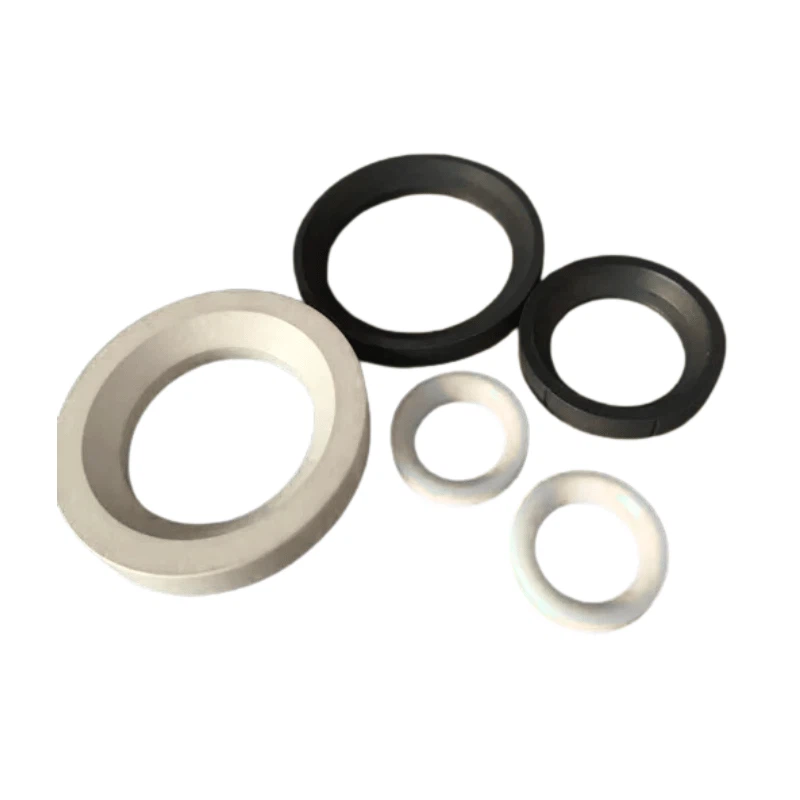
Bronze powder is often used to improve the heat transfer properties of PTFE. It also helps in reducing the coefficient of friction under high - load conditions. Graphite, on the other hand, can improve the self - lubricating properties of PTFE, making it even more suitable for applications where low friction is required.
Chemical Modification
Chemical modification involves changing the chemical structure of the PTFE molecules. This can be done by using specific chemical reagents. For example, some chemicals can react with the PTFE chains to introduce functional groups on the surface of the polymer. These functional groups can improve the adhesion of PTFE to other materials, which is very useful in applications where PTFE needs to be bonded to other components.
Another form of chemical modification is radiation - induced grafting. In this process, the PTFE powder is exposed to radiation, which creates free radicals on the polymer chains. Then, specific monomers are added, and they react with the free radicals to form grafted polymers. This can change the surface properties of PTFE, such as its wettability and surface energy.
Powder Production after Modification
After the modification process, the next step is to turn the modified PTFE material into a fine powder. This is usually done through a process called micronization.
Micronization involves using high - energy mills, such as jet mills or ball mills. In a jet mill, the modified PTFE material is fed into a chamber where it is accelerated by high - velocity gas streams. The particles collide with each other and with the walls of the chamber, breaking them down into smaller particles. The size of the powder particles can be controlled by adjusting the operating parameters of the jet mill, such as the gas pressure and the feed rate.
Ball mills work in a different way. They use balls made of materials like steel or ceramic to grind the modified PTFE material. The balls rotate inside a cylinder, and as they move, they crush and grind the PTFE particles. The grinding process can take several hours, depending on the desired particle size.
Quality Control
Throughout the manufacturing process, quality control is of utmost importance. We need to ensure that the Modified PTFE powder meets the required specifications.
We test the powder for various properties, such as particle size distribution, density, and chemical composition. Particle size distribution is crucial because it affects the flowability and processing characteristics of the powder. We use techniques like laser diffraction to measure the particle size distribution accurately.
The density of the powder can also influence its performance. We measure the density using standard methods to ensure that it is within the acceptable range. Chemical composition analysis is done to verify that the additives are evenly distributed and that the modification has been successful.
Applications of Modified PTFE Powder
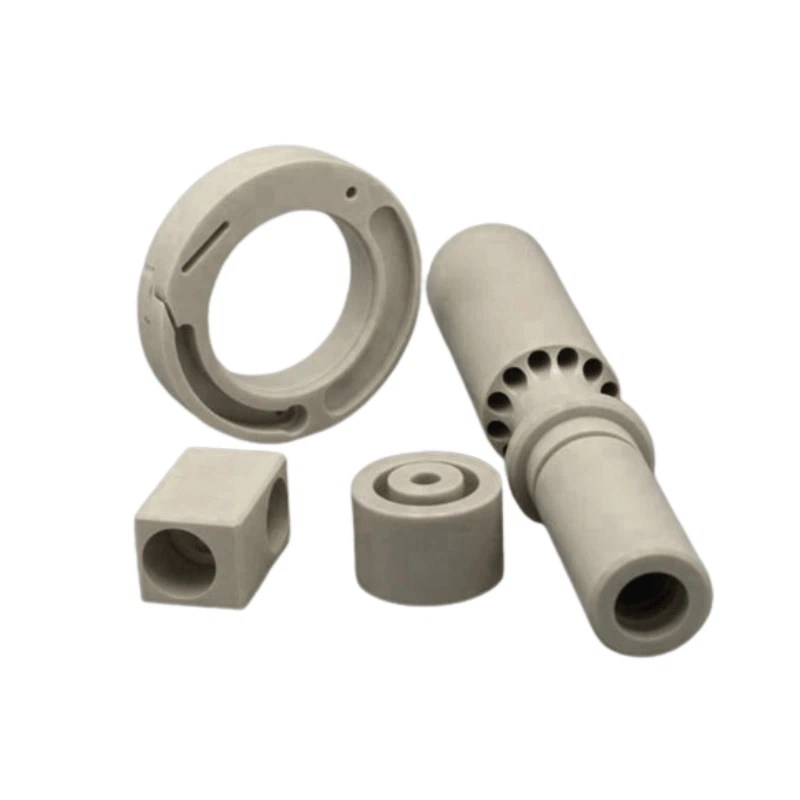
Modified PTFE powder has a wide range of applications. For example, it can be used to make Modified PTFE Rod. These rods are often used in mechanical engineering applications, such as bearings and bushings, where high wear resistance and low friction are required.
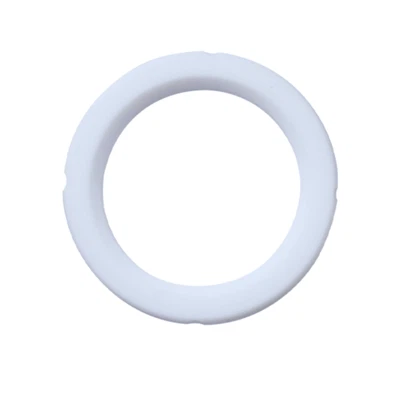
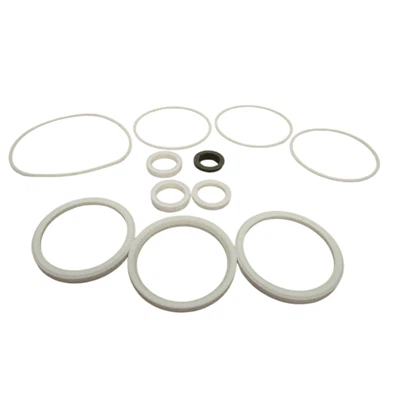
Modified PTFE powder is also used to produce Modified PTFE Gasket. Gaskets made from Modified PTFE can withstand high temperatures and pressures, and they have excellent chemical resistance, making them suitable for use in chemical processing plants and other industrial applications.
If you're curious about the technical terms, you might want to check out RPTFE Full Form to learn more about related concepts.
Why Choose Our Modified PTFE Powder
As a supplier, we take pride in our Modified PTFE powder. We have strict quality control measures in place to ensure that every batch of powder meets the highest standards. Our experienced team uses the latest manufacturing techniques to produce powder with consistent quality.
Whether you need Modified PTFE powder for a small - scale project or a large - scale industrial application, we can provide you with the right product. We offer customized solutions, so if you have specific requirements for the properties of the powder, we can work with you to develop a product that meets your needs.
Let's Connect
If you're interested in our Modified PTFE powder, I'd love to hear from you. Whether you have questions about the product, need a sample, or want to discuss a potential order, don't hesitate to reach out. We're here to help you find the best Modified PTFE powder solution for your business.
References
- "Handbook of Fluoropolymer Science and Technology"
- "Polytetrafluoroethylene (PTFE) and Its Modifications" in Journal of Polymer Science
So, that's a detailed look at how Modified PTFE powder is made. I hope this blog has given you a better understanding of the process and the benefits of using Modified PTFE powder. Looking forward to hearing from you!