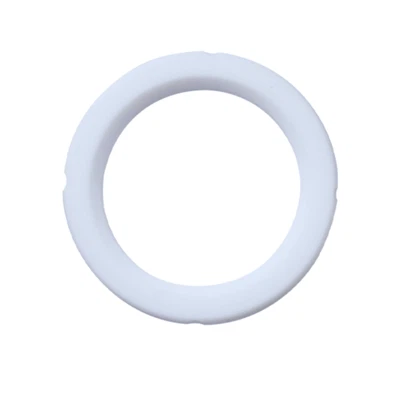
Hey there! As a supplier of Modified PTFE EZ, I often get asked about the gas permeability of this amazing material. So, let's dive right in and break it down.
First off, what's Modified PTFE EZ? Well, it's an upgraded version of the traditional PTFE (Polytetrafluoroethylene). PTFE is already well - known for its excellent chemical resistance, low friction, and high - temperature tolerance. But Modified PTFE EZ takes it a step further with some tweaks to its molecular structure and properties.


Now, onto the main topic: gas permeability. Gas permeability refers to how easily gases can pass through a material. In the world of industrial applications, understanding the gas permeability of a material like Modified PTFE EZ is super important. For example, in sealing applications, you don't want gases to leak through the seals. On the other hand, in some filtration processes, a certain level of gas permeability might be desirable.
The gas permeability of Modified PTFE EZ is quite different from that of regular PTFE. Regular PTFE has a relatively low gas permeability because of its tight molecular structure. The carbon - fluorine bonds in PTFE are very strong, and the chains are closely packed, which makes it difficult for gas molecules to pass through.
However, Modified PTFE EZ has been engineered to have a more controlled gas permeability. We've made some modifications to the material, like adding certain fillers or changing the processing conditions. These changes create tiny channels or pores in the material, which allow gas molecules to move through at a more predictable rate.
Let's talk about the factors that affect the gas permeability of Modified PTFE EZ. Temperature is a big one. As the temperature increases, the gas molecules have more energy, and they can move more freely. So, the gas permeability of Modified PTFE EZ generally increases with temperature. But don't worry, our material can still maintain its performance within a wide temperature range.
The pressure difference across the material also plays a role. A higher pressure difference will drive the gas molecules through the material more quickly, increasing the gas permeability. And the type of gas matters too. Different gases have different molecular sizes and properties. Smaller gas molecules, like hydrogen, can pass through the material more easily than larger ones, such as carbon dioxide.
In industrial applications, the gas permeability of Modified PTFE EZ can be a real game - changer. For instance, in the chemical industry, where there are often corrosive gases, our Modified PTFE EZ can be used as a sealing material. Its low and controlled gas permeability ensures that there are no unwanted gas leaks, protecting the environment and the workers.
In the food and beverage industry, Modified PTFE EZ can be used in packaging. It can act as a barrier, preventing oxygen and other gases from entering the package, which helps to keep the food fresh for longer.
Now, I want to mention some of our awesome products related to Modified PTFE EZ. If you're interested in our general Modified PTFE Product, we have a wide range of options to meet your needs. And for those looking for something specifically for sealing applications, our MPTFE Seat Material is top - notch. It has the right balance of gas permeability and mechanical strength. Also, if you need a more enhanced version, our Filled Modified PTFE Product adds some extra benefits to the already great Modified PTFE EZ.
So, if you're in the market for a high - quality material with controlled gas permeability, you should definitely consider our Modified PTFE EZ. Whether you're in the manufacturing industry, the medical field, or any other sector that requires reliable materials, we've got you covered. Don't hesitate to reach out if you have any questions or want to start a purchase negotiation. We're here to help you find the perfect solution for your specific requirements.
References:
- "Handbook of PTFE and Other Fluoropolymers"
- "Advanced Materials for Industrial Applications"