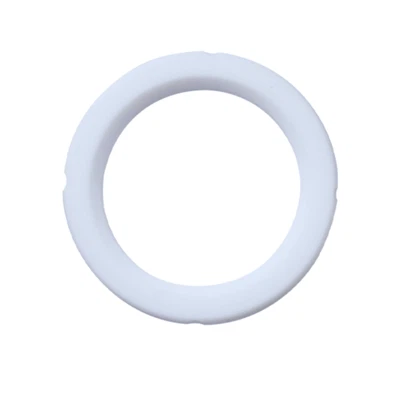
What is the Hardness of RPTFE Seals?
As a supplier of RPTFE (Reinforced Polytetrafluoroethylene) seals, I often encounter inquiries about the hardness of these essential components. Understanding the hardness of RPTFE seals is crucial for various industries that rely on them for effective sealing solutions.
The Basics of RPTFE Seals
RPTFE is a high - performance material known for its exceptional chemical resistance, low friction coefficient, and wide temperature range capabilities. It is a type of reinforced PTFE, which means that it has additional materials incorporated into the PTFE matrix to enhance its mechanical properties. This reinforcement can take various forms, such as glass fibers, carbon fibers, or other fillers.
RPTFE seals are used in a plethora of applications, including automotive, aerospace, chemical processing, and food and beverage industries. In each of these sectors, the sealing requirements vary, and the hardness of the RPTFE seal plays a vital role in meeting those needs.
Measuring the Hardness of RPTFE Seals
Hardness is a measure of a material's resistance to deformation. For RPTFE seals, the most commonly used hardness scale is the Shore D hardness scale. The Shore D scale is used for measuring the hardness of hard rubbers, semi - rigid plastics, and some thermoplastics.
The hardness of RPTFE seals can range from around 50 to 90 Shore D. A lower Shore D value indicates a softer material, while a higher value represents a harder material. Softer RPTFE seals (around 50 - 60 Shore D) are more flexible and can conform better to irregular surfaces. They are often used in applications where the mating surfaces are not perfectly smooth or where a tight seal needs to be achieved under relatively low pressures.
On the other hand, harder RPTFE seals (around 80 - 90 Shore D) are more resistant to wear and deformation. They can withstand higher pressures and are suitable for applications where there is significant mechanical stress or where the seal needs to maintain its shape over a long period. For example, in high - pressure hydraulic systems, a harder RPTFE seal would be more appropriate to prevent leakage under extreme pressure conditions.
Factors Affecting the Hardness of RPTFE Seals
Several factors can influence the hardness of RPTFE seals. One of the primary factors is the type and amount of reinforcement used. Different types of fillers have different effects on the hardness of the material. For instance, glass fiber reinforcement generally increases the hardness of RPTFE, making it more rigid and resistant to wear. The more glass fibers are added, the higher the hardness of the resulting RPTFE seal will be.
The manufacturing process also plays a significant role in determining the hardness of RPTFE seals. Processes such as compression molding, injection molding, or sintering can affect the density and uniformity of the material, which in turn impacts its hardness. For example, a well - sintered RPTFE seal may have a more uniform hardness distribution compared to a seal that was not sintered properly.


Another factor is the temperature at which the RPTFE seal will operate. RPTFE is known for its good thermal stability, but temperature can still have an effect on its hardness. At high temperatures, the material may become slightly softer, which can affect its sealing performance. Therefore, it is important to consider the operating temperature range when selecting the appropriate hardness for an RPTFE seal.
Importance of Appropriate Hardness in RPTFE Seals
Selecting the right hardness for an RPTFE seal is crucial for ensuring optimal performance. If the seal is too soft for the application, it may extrude under pressure, leading to leakage and reduced service life. For example, in a high - pressure piping system, a soft RPTFE seal may be unable to withstand the pressure and may be forced out of its sealing groove.
Conversely, if the seal is too hard, it may not be able to conform to the mating surfaces properly, resulting in incomplete sealing. This can also lead to leakage, especially in applications where the surfaces are not perfectly flat or smooth. In addition, a hard seal may be more prone to cracking or breaking under certain conditions, such as when there is vibration or shock.
Different Types of RPTFE Seals and Their Hardness Requirements
There are several types of RPTFE seals available, each with its own unique hardness requirements.
- RPTFE Seal: These are general - purpose seals that can be used in a wide range of applications. For applications where the seal needs to be moderately flexible and able to conform to surfaces, a hardness of around 60 - 70 Shore D is often suitable. However, for applications with higher pressure and more demanding operating conditions, a harder seal with a hardness of 70 - 80 Shore D may be required.
- RPTFE Gasket: Gaskets are used to create a static seal between two mating surfaces. They need to be able to fill in any irregularities on the surfaces and provide a reliable seal. Softer RPTFE gaskets with a hardness of 50 - 60 Shore D are often used for applications where the sealing pressure is relatively low and the surfaces are not perfectly flat. For high - pressure applications, such as in industrial pipelines, harder gaskets with a hardness of 70 - 90 Shore D may be more appropriate.
- RPTFE Ball Cone: Ball - cone seals are used in applications where there is rotational or linear motion. They need to have good wear resistance and be able to maintain their shape under dynamic conditions. A hardness of around 75 - 85 Shore D is typically suitable for RPTFE ball - cone seals to ensure they can withstand the mechanical stress associated with the motion.
How to Choose the Right Hardness for Your Application
When choosing the hardness of an RPTFE seal for your application, consider the following factors:
- Operating pressure: Higher pressures generally require harder seals to prevent extrusion and leakage.
- Mating surface conditions: If the surfaces are rough or irregular, a softer seal may be needed to ensure a good seal.
- Operating temperature: High temperatures can soften the material, so you may need to choose a harder seal if the application involves high - temperature operation.
- Type of motion: For dynamic applications with movement, a harder seal with good wear resistance is usually preferred.
In conclusion, the hardness of RPTFE seals is a critical factor that affects their performance and suitability for different applications. As a supplier, we have the expertise and experience to help you select the right hardness for your specific needs. Whether you are looking for a RPTFE Seal, RPTFE Gasket, or RPTFE Ball Cone, we can provide you with the best - in - class products. If you have any questions or need further information about our RPTFE seals, please feel free to reach out to us to start a procurement discussion.
References
- Smith, J. (2018). Sealing Technology Handbook. London: Elsevier.
- Johnson, R. (2019). Polytetrafluoroethylene and its Applications. New York: Springer.
- ASTM D2240 - 15. (2015). Standard Test Method for Rubber Property - Durometer Hardness. ASTM International.