As a supplier of RPTFE Teflon, I often encounter questions from customers about the differences between RPTFE Teflon and ETFE. These two materials are widely used in various industries due to their excellent properties, but they also have distinct characteristics that make them suitable for different applications. In this blog post, I will delve into the details of RPTFE Teflon and ETFE, comparing their properties, applications, and performance to help you make an informed decision when choosing the right material for your project.
1. Understanding RPTFE Teflon
RPTFE Teflon, or Reinforced Polytetrafluoroethylene Teflon, is a high - performance fluoropolymer material. It is a modified version of PTFE, which has been enhanced with fillers to improve its mechanical properties. PTFE itself is well - known for its outstanding chemical resistance, low friction coefficient, and high temperature resistance. However, it has some limitations such as poor creep resistance and low mechanical strength.
By adding fillers like glass fiber, carbon fiber, or bronze powder, RPTFE Teflon overcomes these limitations. The fillers increase the material's stiffness, reduce its deformation under load (creep), and improve its wear resistance. This makes RPTFE Teflon an ideal choice for applications where high mechanical performance is required in addition to the traditional PTFE properties. For more information on RPTFE Teflon, you can visit RPTFE Teflon.
2. Understanding ETFE
ETFE, or Ethylene Tetrafluoroethylene, is a copolymer of ethylene and tetrafluoroethylene. It combines the best properties of polyethylene and PTFE. ETFE has excellent chemical resistance, similar to PTFE, but it also has good mechanical properties such as high tensile strength and impact resistance.
One of the key advantages of ETFE is its transparency. It is highly transparent to visible light and ultraviolet radiation, which makes it a popular choice for architectural applications, such as roofing and facades. ETFE also has a relatively low density compared to other fluoropolymers, making it lightweight. Additionally, it has good weatherability and can withstand harsh environmental conditions for a long time.
3. Chemical and Physical Properties Comparison
Chemical Resistance
Both RPTFE Teflon and ETFE offer excellent chemical resistance. They are resistant to a wide range of chemicals, including acids, bases, and organic solvents. However, RPTFE Teflon, with its PTFE base, has slightly better resistance to some aggressive chemicals due to the inherent stability of PTFE. For example, in highly concentrated sulfuric acid or hydrofluoric acid environments, RPTFE Teflon may perform better than ETFE.
Temperature Resistance
RPTFE Teflon can generally withstand higher temperatures than ETFE. RPTFE Teflon can operate continuously at temperatures up to 260°C (500°F) and can tolerate short - term temperature spikes even higher. In contrast, ETFE has a continuous service temperature of around 150°C (302°F). This makes RPTFE Teflon more suitable for high - temperature applications such as in chemical processing plants or in some aerospace components.


Mechanical Properties
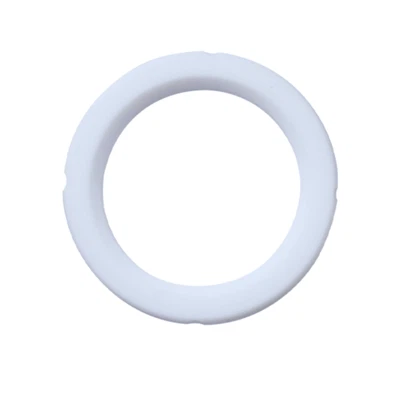
In terms of mechanical strength, RPTFE Teflon and ETFE have different characteristics. RPTFE Teflon, with its fillers, has high compressive strength and good wear resistance. It is less likely to deform under heavy loads, which is crucial in applications such as RPTFE in Valve where sealing and long - term performance under pressure are required.
ETFE, on the other hand, has high tensile strength and impact resistance. It can withstand stretching and sudden impacts without breaking. This makes it suitable for applications where the material needs to be flexible and durable, such as in cable insulation or in architectural membranes.
Electrical Properties
Both materials have good electrical insulation properties. RPTFE Teflon has a very low dielectric constant and dissipation factor, which makes it an excellent choice for high - frequency electrical applications. ETFE also has good electrical insulation, but its electrical properties may vary depending on the specific formulation and processing conditions.
4. Applications Comparison
RPTFE Teflon Applications
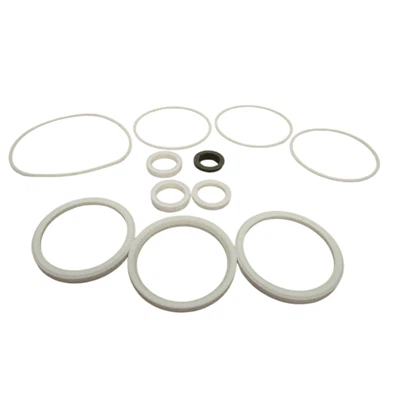
- Valve Seals: RPTFE Teflon is widely used in valve seals because of its excellent chemical resistance, low friction coefficient, and high compressive strength. It can provide a reliable seal in high - pressure and high - temperature environments, ensuring the proper functioning of valves in chemical, oil, and gas industries. You can find more details about RPTFE in valve applications at RPTFE in Valve.
- Bearing and Bushings: The low friction and high wear resistance of RPTFE Teflon make it an ideal material for bearings and bushings. It can reduce friction and wear, extending the service life of mechanical components.
- Gaskets: In chemical processing plants, RPTFE Teflon gaskets are used to seal joints between pipes, flanges, and other equipment. They can withstand aggressive chemicals and high temperatures, preventing leaks and ensuring the safety of the process.
ETFE Applications
- Architectural Applications: As mentioned earlier, ETFE's transparency and weatherability make it a popular choice for architectural projects. It is used in the construction of large - scale roofs, facades, and domes. For example, the Beijing National Aquatics Center (the "Water Cube") uses ETFE membranes for its exterior.
- Cable Insulation: ETFE's good electrical insulation properties, combined with its mechanical flexibility and resistance to environmental factors, make it suitable for cable insulation. It can protect cables from damage and ensure reliable electrical transmission.
- Solar Panel Encapsulation: ETFE is used to encapsulate solar panels because of its transparency to sunlight and its ability to protect the solar cells from environmental damage.
5. Processing and Fabrication
RPTFE Teflon is typically processed using traditional PTFE processing methods, such as compression molding, ram extrusion, and machining. However, due to the presence of fillers, the processing may require some adjustments. For example, the molding temperature and pressure may need to be optimized to ensure the proper dispersion of fillers and the formation of a homogeneous material.
ETFE can be processed using more common thermoplastic processing methods, such as injection molding, extrusion, and blow molding. This is because ETFE is a thermoplastic material, which means it can be melted and reshaped multiple times. The ease of processing makes ETFE more suitable for mass - production applications.
6. Cost Considerations
The cost of RPTFE Teflon and ETFE can vary depending on several factors, including raw material prices, processing complexity, and market demand. Generally, RPTFE Teflon may be more expensive than ETFE. The cost of RPTFE Teflon is influenced by the cost of fillers and the more complex processing requirements. ETFE, on the other hand, benefits from its thermoplastic nature, which allows for more efficient processing and potentially lower production costs.
7. Conclusion
In conclusion, both RPTFE Teflon and ETFE are high - performance materials with their own unique properties and applications. RPTFE Teflon is a great choice when high temperature resistance, high mechanical strength under compression, and excellent chemical resistance are required. It is well - suited for industrial applications such as valve seals, bearings, and gaskets. For more information on RPTFE Teflon material, visit RPTFE Material.
ETFE, on the other hand, is preferred for applications where transparency, high tensile strength, and ease of processing are important. It shines in architectural, electrical, and solar energy applications.
When choosing between RPTFE Teflon and ETFE for your project, you need to carefully consider the specific requirements of your application, including chemical environment, temperature range, mechanical stress, and cost. If you are still unsure which material is right for you, or if you are interested in purchasing RPTFE Teflon, please feel free to contact us for a detailed consultation. Our team of experts is ready to help you make the best decision for your project.
References
- "Fluoropolymers: Synthesis, Properties, and Applications" by X. Huang and B. Guo
- "Handbook of Fluoropolymer Science and Technology" edited by H. Mark, N. Bikales, C. Overberger, and G. Menges