What is the corrosion resistance of TFM Modified PTFE in salt - water?
As a supplier of TFM Modified PTFE, I am often asked about the corrosion resistance of this remarkable material in salt - water environments. In this blog post, I will delve into the details of TFM Modified PTFE's performance in salt - water, providing scientific insights and practical information for those considering its use.
Understanding TFM Modified PTFE
TFM Modified PTFE is a high - performance fluoropolymer that combines the excellent properties of PTFE (Polytetrafluoroethylene) with additional modifications. PTFE is well - known for its low friction coefficient, high chemical resistance, and wide temperature range tolerance. However, traditional PTFE has some limitations, such as creep under load and relatively poor dimensional stability. TFM Modified PTFE addresses these issues by incorporating small amounts of comonomers during the polymerization process.
The addition of these comonomers enhances the material's mechanical properties, including reduced creep, improved flex life, and better stress crack resistance. At the same time, it retains the outstanding chemical resistance that is characteristic of PTFE. You can learn more about Modified PTFE TFM on our website.
Corrosion Resistance Mechanism in Salt - water
Salt - water is a complex corrosive medium containing various salts, such as sodium chloride, magnesium chloride, and calcium chloride, as well as dissolved oxygen and other trace elements. Corrosion in salt - water typically occurs through electrochemical processes. When a metal is exposed to salt - water, an electrochemical cell is formed, with the metal acting as an anode and the surrounding salt - water as an electrolyte. Oxidation reactions take place at the anode, leading to the dissolution of the metal.
TFM Modified PTFE, on the other hand, is a non - metallic material with a highly stable molecular structure. The carbon - fluorine bonds in PTFE are extremely strong, which gives the material excellent chemical inertness. These bonds prevent the penetration of salt ions and other corrosive species into the material. As a result, TFM Modified PTFE does not participate in electrochemical reactions in salt - water, and it remains chemically stable even when exposed to harsh salt - water environments for extended periods.
Laboratory Tests and Real - world Applications
Numerous laboratory tests have been conducted to evaluate the corrosion resistance of TFM Modified PTFE in salt - water. In these tests, samples of TFM Modified PTFE are immersed in salt - water solutions with different concentrations and temperatures for a specified period. After the immersion, the samples are examined for any signs of degradation, such as weight loss, surface changes, or loss of mechanical properties.
The results of these tests consistently show that TFM Modified PTFE exhibits excellent corrosion resistance in salt - water. There is no significant weight loss, and the surface of the material remains smooth and intact. The mechanical properties, such as tensile strength and elongation at break, also remain largely unchanged.
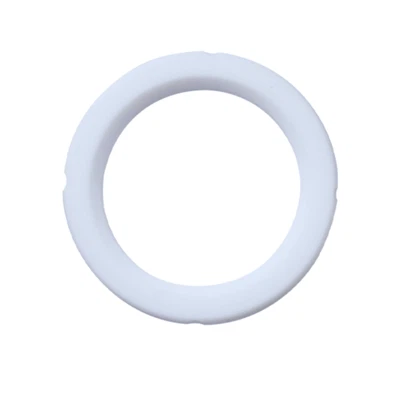
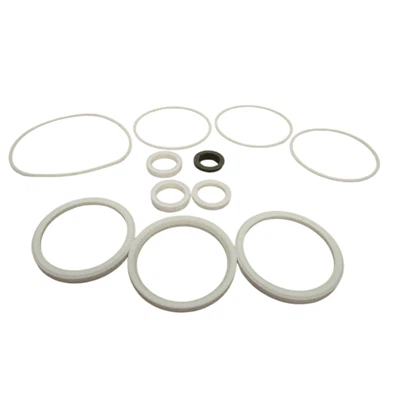
In real - world applications, TFM Modified PTFE is widely used in the marine and offshore industries. For example, it is used as gaskets, seals, and linings in seawater desalination plants, where it is in direct contact with highly concentrated salt - water. It is also used in shipbuilding for components such as valves, pumps, and pipes, where it helps to prevent corrosion and ensure the long - term reliability of the equipment.


Comparison with Other Materials
When compared with other materials commonly used in salt - water environments, TFM Modified PTFE has several advantages. Metals, such as stainless steel, are prone to corrosion in salt - water, especially in the presence of chloride ions. Although some stainless steels have good corrosion resistance, they may still suffer from pitting corrosion, crevice corrosion, and stress corrosion cracking.
Rubber materials, on the other hand, may degrade over time in salt - water due to swelling, oxidation, and chemical attack. They may also lose their elasticity and sealing properties, leading to leaks and equipment failures.
TFM Modified PTFE, with its excellent chemical resistance, low friction coefficient, and good mechanical properties, provides a reliable and long - lasting solution for salt - water applications. It can withstand the harsh conditions of salt - water environments without significant degradation, making it an ideal choice for many critical applications.
Factors Affecting Corrosion Resistance
While TFM Modified PTFE generally has excellent corrosion resistance in salt - water, there are some factors that can affect its performance. Temperature is one of the most important factors. As the temperature increases, the rate of chemical reactions and the diffusion of corrosive species also increase. Although TFM Modified PTFE has a wide temperature range tolerance, extremely high temperatures may still have a negative impact on its long - term performance.
The concentration of salt in the water also plays a role. Higher salt concentrations can increase the corrosivity of the medium, but TFM Modified PTFE can still maintain its chemical stability even in highly concentrated salt - water solutions.
In addition, the presence of other contaminants in the salt - water, such as acids, alkalis, or heavy metals, may also affect the performance of TFM Modified PTFE. However, due to its high chemical inertness, TFM Modified PTFE is relatively resistant to these contaminants.
Compatibility with Other Materials
In practical applications, TFM Modified PTFE is often used in combination with other materials. It is important to ensure the compatibility of TFM Modified PTFE with these materials to avoid any potential problems. For example, when used as a gasket between two metal flanges, the surface finish and hardness of the metal flanges should be considered to ensure a proper seal.
TFM Modified PTFE is generally compatible with most metals and other non - metallic materials. However, in some cases, a suitable adhesive or coating may be required to improve the bonding between TFM Modified PTFE and other materials.
Conclusion and Call to Action
In conclusion, TFM Modified PTFE offers excellent corrosion resistance in salt - water environments. Its highly stable molecular structure and chemical inertness make it a reliable choice for a wide range of applications in the marine and offshore industries. Whether you are looking for gaskets, seals, or linings for your salt - water equipment, TFM Modified PTFE can provide the long - term performance and reliability you need.
If you are interested in learning more about TFM Modified PTFE or would like to discuss your specific application requirements, please do not hesitate to contact us. Our team of experts is ready to provide you with detailed information and technical support. We can also offer customized solutions to meet your unique needs.
References
- "Handbook of Fluoropolymer Science and Technology", edited by H. B. Mark, Jr., N. M. Bikales, C. G. Overberger, and G. Menges.
- "Corrosion Resistance of Engineering Materials in Seawater", published by the American Society for Testing and Materials (ASTM).
- Technical reports and research papers on TFM Modified PTFE from leading manufacturers and research institutions.