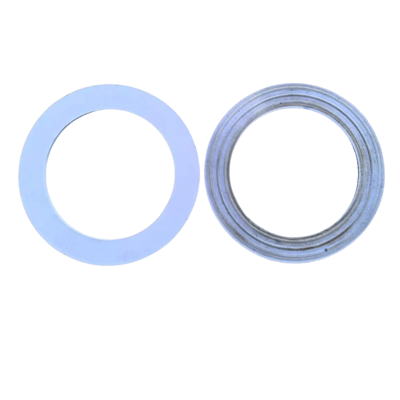
In the field of industrial sealing solutions, RPTFE (Reinforced Polytetrafluoroethylene) seals have emerged as a game - changer. As a leading RPTFE seals supplier, I am constantly engaged in understanding and communicating the unique stress - strain characteristics of these remarkable sealing products. This blog post aims to delve deep into the stress - strain behavior of RPTFE seals, highlighting their importance and practical implications in various applications.
Understanding the Basics of RPTFE
Before we explore the stress - strain characteristics, it is essential to understand what RPTFE is. RPTFE is a composite material that combines the excellent chemical resistance and low friction properties of PTFE with the enhanced mechanical strength provided by reinforcement materials. This combination makes RPTFE seals highly suitable for a wide range of industries, including chemical processing, oil and gas, and food and beverage.
Stress - Strain Curve of RPTFE Seals
The stress - strain curve is a fundamental tool for understanding the mechanical behavior of materials. For RPTFE seals, the stress - strain curve typically exhibits several distinct regions.


Elastic Region
In the initial stage, the RPTFE seal behaves elastically. When a stress is applied, the seal deforms proportionally to the applied stress. This means that once the stress is removed, the seal returns to its original shape. The slope of the stress - strain curve in this region is known as the elastic modulus. RPTFE seals generally have a relatively low elastic modulus compared to some traditional sealing materials. This low modulus allows the seals to conform easily to irregular surfaces, ensuring a tight seal. For example, in a flange connection where the mating surfaces may not be perfectly flat, the RPTFE seal can deform elastically to fill the gaps and prevent leakage.
Yield Point
As the applied stress increases, the RPTFE seal reaches a point known as the yield point. At this stage, the material begins to undergo permanent deformation. The yield point is an important parameter as it indicates the maximum stress that the seal can withstand without significant permanent damage. In practical applications, it is crucial to ensure that the operating stress on the RPTFE seal remains below the yield point to maintain its sealing performance over the long term.
Plastic Region
Beyond the yield point, the RPTFE seal enters the plastic region. In this region, the material continues to deform under increasing stress, and the deformation is no longer fully reversible. However, RPTFE seals can exhibit a significant amount of plastic deformation before failure. This property is beneficial in applications where the seal may be subjected to occasional over - stressing. For instance, in a pipeline system where there may be sudden pressure surges, the RPTFE seal's ability to undergo plastic deformation can prevent catastrophic failure and maintain a certain level of sealing integrity.
Ultimate Tensile Strength and Failure
The ultimate tensile strength is the maximum stress that the RPTFE seal can withstand before it breaks or fails. Once the applied stress reaches this value, the seal will rupture, leading to a loss of sealing function. Understanding the ultimate tensile strength is crucial for designing sealing systems that can operate safely under various conditions.
Factors Affecting the Stress - Strain Characteristics of RPTFE Seals
Several factors can influence the stress - strain behavior of RPTFE seals.
Temperature
Temperature has a significant impact on the mechanical properties of RPTFE seals. At low temperatures, the material becomes more brittle, and the elastic modulus increases. This means that the seal may be less able to conform to surfaces and may be more prone to cracking under stress. On the other hand, at high temperatures, the RPTFE seal becomes softer, and the yield point and ultimate tensile strength decrease. Therefore, it is essential to select the appropriate RPTFE seal material based on the operating temperature range of the application.
Reinforcement Material
The type and amount of reinforcement material used in the RPTFE seal can also affect its stress - strain characteristics. Different reinforcement materials, such as glass fiber, carbon fiber, or aramid fiber, have different mechanical properties. For example, glass fiber - reinforced RPTFE seals generally have higher stiffness and strength compared to non - reinforced or less - reinforced counterparts. The amount of reinforcement also plays a role; increasing the amount of reinforcement can enhance the tensile strength and elastic modulus of the seal but may reduce its flexibility.
Manufacturing Process
The manufacturing process of RPTFE seals can influence their internal structure and, consequently, their stress - strain behavior. For example, compression molding and extrusion are two common manufacturing processes. Compression - molded seals may have a more uniform internal structure, resulting in more consistent mechanical properties. Extruded seals, on the other hand, may have a different molecular orientation, which can affect their directional strength properties.
Practical Applications and the Importance of Stress - Strain Characteristics
Chemical Processing Industry
In the chemical processing industry, RPTFE seals are widely used due to their excellent chemical resistance. The stress - strain characteristics of these seals are critical for ensuring long - term leakage prevention. For example, in a reactor vessel where the seal may be subjected to high pressures and temperature fluctuations, the ability of the RPTFE seal to deform elastically and withstand some plastic deformation without failure is essential. This ensures that the reactor remains sealed, preventing the leakage of hazardous chemicals.
Oil and Gas Industry
In the oil and gas industry, RPTFE seals are used in various applications, such as pipeline connections and valve seals. The high - pressure and dynamic nature of these applications require seals with good stress - strain properties. The ability of RPTFE seals to conform to the rough surfaces of pipeline flanges and valves, as well as to withstand pressure fluctuations, makes them an ideal choice. For instance, in an offshore oil platform, the seals need to withstand harsh environmental conditions, including high pressures, saltwater corrosion, and temperature variations. The stress - strain characteristics of RPTFE seals help ensure reliable sealing performance in such demanding environments.
Food and Beverage Industry
In the food and beverage industry, hygiene and sealing performance are of utmost importance. RPTFE seals are often used because they are non - toxic and can provide a tight seal. The stress - strain characteristics of these seals are crucial for maintaining the integrity of the sealing system. For example, in a food processing machine, the seal needs to be able to deform to fit the mating surfaces without releasing any contaminants. The elastic and plastic deformation properties of RPTFE seals ensure that they can meet these requirements.
Exploring Our RPTFE Seal Products
As a trusted RPTFE seals supplier, we offer a wide range of high - quality products. Our RPTFE Gasket is designed to provide excellent sealing performance in various flange connections. It has been carefully engineered to have optimal stress - strain characteristics, ensuring a tight and reliable seal.
Our RPTFE Seal is suitable for a variety of applications, from static to dynamic sealing. It offers a good balance between flexibility and strength, making it ideal for use in different industrial environments.
For more specialized applications, we also provide RPTFE Ball Cone seals. These seals are designed to provide a precise and reliable seal in applications where a conical or spherical sealing surface is required.
Conclusion and Call to Action
In conclusion, the stress - strain characteristics of RPTFE seals are complex but crucial for their performance in various applications. Understanding these characteristics allows engineers and designers to select the right seal for their specific needs. As a leading RPTFE seals supplier, we are committed to providing high - quality products that meet the most demanding requirements.
If you are in need of RPTFE seals for your industrial application, we invite you to contact us for a detailed discussion. Our team of experts is ready to assist you in selecting the most suitable product based on your specific requirements. Whether you are in the chemical processing, oil and gas, or food and beverage industry, we have the right RPTFE seal solution for you.
References
- "Handbook of Seal Technology", Edited by H. O. F. Witt, et al.
- "Polytetrafluoroethylene (PTFE) - Properties, Applications, and Processing", Journal of Polymer Science.