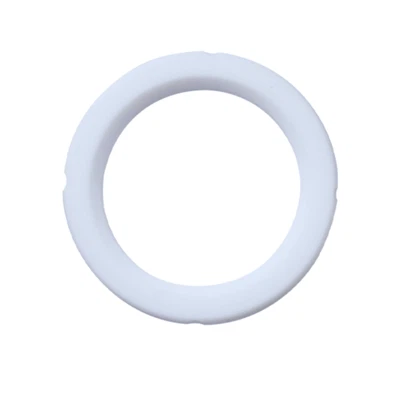
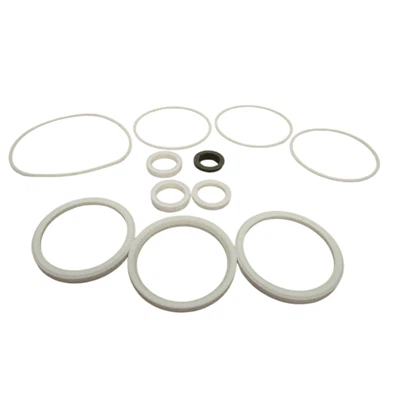
When it comes to gaskets, two popular choices in the market are rPTFE (reinforced Polytetrafluoroethylene) gaskets and rubber gaskets. As a supplier of rPTFE gaskets, I've seen firsthand the benefits that these gaskets offer. However, it's also important to acknowledge that rPTFE gaskets have their disadvantages when compared to rubber gaskets. In this blog post, I'll break down some of these drawbacks to give you a more well - rounded view.
Cost
One of the most significant disadvantages of rPTFE gaskets is the cost. rPTFE gaskets are generally more expensive than rubber gaskets. The production process of rPTFE involves complex steps and the use of high - quality materials. The reinforcement in rPTFE gaskets, which gives them enhanced strength and performance, adds to the manufacturing cost. On the other hand, rubber gaskets are often made from more commonly available materials like natural rubber or synthetic rubber compounds. The raw materials for rubber gaskets are usually cheaper, and the manufacturing process is less intricate. So, if you're working on a tight budget, rubber gaskets might be the more appealing option. For example, if you're a small - scale manufacturer or a DIY enthusiast with limited funds, the cost difference between rPTFE and rubber gaskets can be a deal - breaker.
Flexibility
Rubber gaskets are known for their high flexibility. They can easily conform to irregular surfaces and fill gaps effectively. This flexibility allows rubber gaskets to create a tight seal even on surfaces that are not perfectly flat. In contrast, rPTFE gaskets, while strong, are less flexible. They may not be as forgiving when it comes to uneven surfaces. For instance, in applications where the mating surfaces have minor imperfections or are slightly misaligned, a rubber gasket can adapt and form a reliable seal. But an rPTFE gasket might require more precise surface preparation and alignment to achieve the same level of sealing performance. If your project involves components with less - than - ideal surface conditions, rubber gaskets could be a better fit.
Installation
Installing rPTFE gaskets can be a bit more challenging compared to rubber gaskets. rPTFE gaskets are stiffer, and they need to be handled carefully during installation. They can be more prone to damage if not installed correctly. For example, rPTFE gaskets may require specific torque values when tightening bolts to ensure a proper seal. If the torque is too high, the gasket can be crushed or damaged; if it's too low, the seal may not be effective. Rubber gaskets, on the other hand, are more forgiving during installation. They can tolerate a wider range of installation forces and are less likely to be damaged by rough handling. This makes rubber gaskets a popular choice for quick and easy installations, especially in situations where time is of the essence.
Chemical Compatibility in Some Cases
While rPTFE is known for its excellent chemical resistance, there are some specific chemical environments where rubber gaskets can perform better. Some specialized rubber compounds are formulated to resist certain chemicals that rPTFE may not be as compatible with. For example, in applications involving certain types of organic solvents or specific acidic solutions, there are rubber gaskets that can provide better long - term resistance. Although rPTFE has a broad chemical compatibility range, it's not the best option for every single chemical scenario. So, if your application involves exposure to very specific chemicals, it's important to carefully evaluate the chemical compatibility of both rPTFE and rubber gaskets.
Noise and Vibration Damping
Rubber gaskets have natural noise and vibration damping properties. They can absorb vibrations and reduce noise levels in mechanical systems. This is particularly useful in applications where noise reduction is a priority, such as in automotive engines or industrial machinery. rPTFE gaskets, however, do not have the same level of noise and vibration damping capabilities. They are more focused on providing a strong seal rather than dampening vibrations. So, if your project requires a gasket that can help reduce noise and vibrations, rubber gaskets are the way to go.
Availability
Rubber gaskets are widely available in the market. You can find them in various sizes, shapes, and materials at most hardware stores, automotive supply shops, and industrial suppliers. They are a common item, and you can usually get them quickly. In contrast, rPTFE gaskets may not be as readily available. They are often more specialized products, and you may need to order them from specific suppliers. This can lead to longer lead times, especially if you need a custom - made rPTFE gasket. If you need a gasket urgently, the availability of rubber gaskets can be a major advantage.
Despite the Disadvantages
Despite these disadvantages, rPTFE gaskets still have their place in many applications. They offer excellent chemical resistance in most cases, high - temperature stability, and good mechanical strength. At our company, we offer a range of high - quality rPTFE gaskets such as TG - 1802, TG - 1900, and TG - 1800. These gaskets are designed to meet the demanding requirements of various industries. If you're in an application where chemical resistance, high - temperature performance, or long - term durability is crucial, rPTFE gaskets can be the ideal choice.
Conclusion
In conclusion, while rPTFE gaskets have their disadvantages when compared to rubber gaskets, they also have unique advantages that make them suitable for specific applications. When choosing between rPTFE and rubber gaskets, it's important to consider factors such as cost, flexibility, installation requirements, chemical compatibility, noise and vibration damping, and availability. If you're still unsure which type of gasket is right for your project, don't hesitate to reach out to us. We're here to help you make an informed decision and find the best gasket solution for your needs. Whether you're a large - scale industrial client or a small - business owner, we can provide you with the expertise and products you require. Contact us today to discuss your gasket requirements and start a procurement negotiation.


References
- "Handbook of Seal Technology" by John H. Bickford
- "Gasket Selection Guide" published by the Fluid Sealing Association