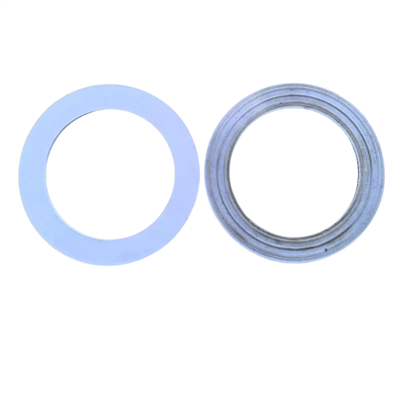
In the dynamic landscape of industrial technology, the realm of sealing solutions is undergoing a profound transformation. As a supplier of RPTFE Seal, I've witnessed firsthand how new technologies are reshaping the performance and application of these critical components. In this blog, we'll explore the multifaceted ways in which emerging technologies are influencing RPTFE seals, from enhancing their performance to expanding their range of applications.
Advancements in Material Science
One of the most significant drivers of change in the RPTFE seal industry is the continuous advancement of material science. New manufacturing techniques and the development of novel additives are enabling the production of RPTFE materials with superior properties. For instance, the incorporation of nanofillers into RPTFE matrices can significantly improve the material's mechanical strength, wear resistance, and thermal stability. These enhanced properties translate into seals that can withstand more demanding operating conditions, such as higher pressures, temperatures, and speeds.
Nanocomposite RPTFE materials, in particular, have shown great promise. By dispersing nanoparticles uniformly throughout the RPTFE matrix, manufacturers can create a synergistic effect that enhances the overall performance of the seal. For example, carbon nanotubes can improve the electrical conductivity of RPTFE seals, making them suitable for applications where electrostatic discharge is a concern. Similarly, ceramic nanoparticles can enhance the hardness and wear resistance of the seal, extending its service life in abrasive environments.
Another area of material science innovation is the development of surface treatments for RPTFE seals. These treatments can modify the surface properties of the seal, such as its friction coefficient, wettability, and chemical resistance. For example, a low-friction surface treatment can reduce the energy consumption of the equipment by minimizing the frictional forces between the seal and the mating surfaces. Additionally, a hydrophobic surface treatment can prevent the ingress of moisture and other contaminants, improving the seal's reliability in harsh environments.
Digitalization and Smart Seals
The rise of the Internet of Things (IoT) and digitalization is also having a profound impact on the RPTFE seal industry. Smart seals, equipped with sensors and communication capabilities, are becoming increasingly common. These seals can monitor various parameters, such as temperature, pressure, and wear, in real-time and transmit the data to a central monitoring system. This allows for proactive maintenance and predictive failure analysis, reducing downtime and improving the overall efficiency of the equipment.
For example, a smart RPTFE Ball Cone seal can be equipped with temperature sensors to monitor the operating temperature of the seal. If the temperature exceeds a certain threshold, the monitoring system can send an alert to the maintenance personnel, indicating that the seal may be at risk of failure. This allows for timely intervention, preventing costly breakdowns and production losses.


In addition to monitoring, smart seals can also be used for self-adjustment and optimization. For example, a seal with an adjustable preload can automatically adjust its sealing force based on the operating conditions, ensuring optimal sealing performance at all times. This not only improves the reliability of the seal but also reduces the energy consumption of the equipment by minimizing the unnecessary sealing force.
Additive Manufacturing
Additive manufacturing, also known as 3D printing, is another technology that is revolutionizing the RPTFE seal industry. This technology allows for the production of complex geometries and customized seals that were previously impossible or difficult to manufacture using traditional methods. With additive manufacturing, it is possible to create seals with internal channels, lattice structures, and other intricate features that can enhance the seal's performance.
For example, a 3D-printed RPTFE seal can be designed with internal channels that allow for the circulation of a cooling fluid. This can help to dissipate heat generated during operation, reducing the temperature of the seal and extending its service life. Additionally, lattice structures can be incorporated into the seal design to improve its flexibility and resilience, making it better able to adapt to dynamic operating conditions.
Additive manufacturing also offers significant advantages in terms of cost and lead time. By eliminating the need for expensive tooling and molds, 3D printing can reduce the production cost of small batches of seals. Additionally, the ability to produce seals on-demand can significantly reduce the lead time, allowing for faster response to customer needs.
Expansion of Application Areas
The improved performance and versatility of RPTFE seals, thanks to new technologies, are opening up new application areas. In the automotive industry, for example, RPTFE seals are increasingly being used in high-performance engines and transmissions. The enhanced temperature and wear resistance of these seals make them suitable for use in applications where traditional seals would quickly fail.
In the aerospace industry, RPTFE seals are being used in critical applications such as hydraulic systems and fuel tanks. The lightweight and high-performance properties of RPTFE make it an ideal material for aerospace applications, where weight reduction and reliability are of utmost importance.
In the chemical processing industry, RPTFE seals are being used in applications where resistance to harsh chemicals and high pressures is required. The chemical inertness of RPTFE makes it resistant to a wide range of chemicals, making it suitable for use in chemical reactors, pumps, and valves.
Conclusion and Call to Action
In conclusion, new technologies are having a profound impact on the performance and application of RPTFE seals. Advancements in material science, digitalization, and additive manufacturing are enabling the production of seals with superior properties and greater versatility. These seals are not only more reliable and durable but also more cost-effective and customizable.
As a supplier of RPTFE seals, we are committed to staying at the forefront of these technological advancements. We invest in research and development to continuously improve our products and offer our customers the latest in sealing technology. Whether you are looking for a standard RPTFE seal or a customized solution, we have the expertise and capabilities to meet your needs.
If you are interested in learning more about our RPTFE seals or discussing your specific application requirements, please don't hesitate to contact us. Our team of experts is ready to assist you in finding the right sealing solution for your needs.
References
- "Advances in Polytetrafluoroethylene (PTFE) Composites: A Review" - Journal of Materials Science
- "Smart Seals: The Future of Sealing Technology" - Sealing Technology Magazine
- "Additive Manufacturing of Polymers: A Review" - Progress in Polymer Science