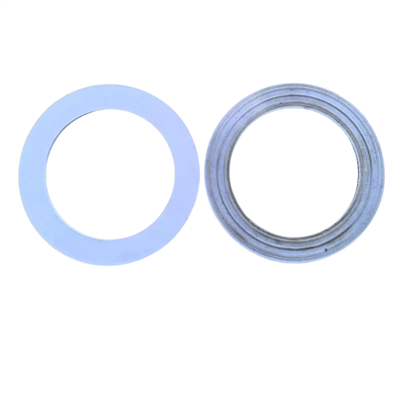
Hey there! I'm a supplier of RPTFE Seat Material, and I've seen my fair share of compatibility issues between RPTFE and other materials. In this blog, I'll share some insights on how to solve these problems and make your projects run smoothly.
Understanding RPTFE Seat Material
First off, let's talk a bit about RPTFE Seat Material. RPTFE stands for Reinforced Polytetrafluoroethylene, which is a super - durable and chemically resistant material. It's widely used in various industries, like chemical processing, oil and gas, and food and beverage, thanks to its excellent sealing properties.
You can check out more about RPTFE Seat Material on our website. There are different types too, such as RPTFE Teflon and RPTFE C Graphite, each with its own unique features.
Common Compatibility Problems
Chemical Incompatibility
One of the most common issues is chemical incompatibility. RPTFE is resistant to a wide range of chemicals, but there are still some substances that can cause problems. For example, some strong oxidizing agents can react with RPTFE over time, leading to material degradation. If you're using RPTFE in a chemical environment, it's crucial to know exactly what chemicals it will come into contact with.
Thermal Incompatibility
Temperature is another factor. RPTFE has a certain temperature range within which it performs optimally. If the operating temperature is too high or too low, it can affect the material's mechanical properties. For instance, at extremely low temperatures, RPTFE can become brittle, while at high temperatures, it may start to deform.
Mechanical Incompatibility
When RPTFE is used in combination with other materials in a mechanical system, there can be issues related to expansion and contraction rates. Different materials expand and contract at different rates when the temperature changes. If these rates are not compatible, it can lead to stress on the RPTFE seat, causing leaks or even failure of the sealing system.
Solutions to Compatibility Problems
Chemical Compatibility Solutions
- Chemical Testing: Before using RPTFE in a chemical environment, conduct thorough chemical testing. You can take samples of the RPTFE material and expose them to the chemicals it will encounter in the actual application. This will help you determine if there are any compatibility issues. If there are, you might need to look for alternative materials or modify the chemical process.
- Coating or Lining: In some cases, applying a protective coating or lining to the RPTFE can prevent chemical attacks. There are special coatings available that can enhance the chemical resistance of RPTFE in specific chemical environments.
Thermal Compatibility Solutions
- Choose the Right Grade: Select the appropriate grade of RPTFE based on the operating temperature. Some grades of RPTFE are designed to withstand higher temperatures, while others are better suited for low - temperature applications. Make sure to check the temperature ratings of the RPTFE material you're using.
- Thermal Insulation: If the operating temperature is outside the optimal range for RPTFE, you can use thermal insulation to protect the material. Insulation can help maintain a more stable temperature around the RPTFE seat, reducing the risk of thermal damage.
Mechanical Compatibility Solutions
- Material Selection: When designing a mechanical system, choose materials with similar expansion and contraction rates. This can minimize the stress on the RPTFE seat due to temperature changes. For example, if you're using RPTFE in a valve, select valve components made of materials that have compatible thermal expansion coefficients.
- Flexible Design: Incorporate flexibility into the design of the sealing system. This can help accommodate the differences in expansion and contraction between RPTFE and other materials. For instance, using flexible gaskets or seals can absorb some of the stress caused by thermal changes.
Case Studies
Chemical Compatibility Case
A chemical processing plant was using RPTFE seats in a system where they were handling a mixture of acids. Initially, they didn't realize that one of the acids was a strong oxidizing agent. After a few months, they noticed that the RPTFE seats were starting to degrade, leading to leaks. They conducted chemical testing and found the culprit. To solve the problem, they switched to a different grade of RPTFE that was more resistant to the specific acid and also applied a protective coating. This solved the chemical compatibility issue, and the system has been running smoothly ever since.
Thermal Compatibility Case
In an industrial refrigeration system, RPTFE seats were used in valves. The operating temperature was very low, and over time, the RPTFE seats became brittle and started to crack. The solution was to switch to a low - temperature - resistant grade of RPTFE. Additionally, they added thermal insulation around the valves to maintain a more stable temperature. This resolved the thermal compatibility problem and improved the reliability of the system.
Mechanical Compatibility Case
A manufacturing plant was using RPTFE seats in a pump system. The pump components were made of a metal that had a different expansion rate than RPTFE. As the temperature changed during operation, the stress on the RPTFE seats caused leaks. They redesigned the pump system to include flexible seals that could accommodate the differences in expansion. This eliminated the mechanical compatibility issue and reduced maintenance costs.
Importance of Regular Inspections
Even if you've taken all the necessary steps to ensure compatibility, it's still important to conduct regular inspections. Over time, the operating conditions may change, or there could be unforeseen factors that affect the compatibility of RPTFE with other materials. By inspecting the RPTFE seats regularly, you can catch any potential problems early and take corrective actions before they lead to major failures.
Conclusion
Solving compatibility problems between RPTFE Seat Material and other materials is crucial for the success of your projects. By understanding the common problems, taking appropriate solutions, and conducting regular inspections, you can ensure that your RPTFE seats perform well and last a long time.


If you're facing any compatibility issues or are looking to use RPTFE Seat Material in your projects, don't hesitate to reach out. We're here to help you find the best solutions for your specific needs. Whether it's choosing the right grade of RPTFE or designing a compatible system, we've got the expertise to assist you.
References
- "Handbook of Polytetrafluoroethylene (PTFE) and Related Fluoropolymers"
- Industry research reports on sealing materials
- Technical data sheets of RPTFE materials