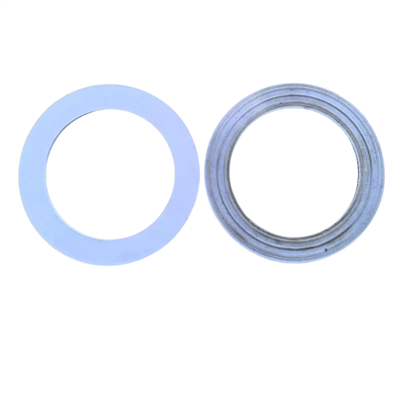
Hey there! As a supplier of rPTFE gaskets, I've been getting a lot of questions lately about how the liquid permeability of these gaskets affects their sealing performance. So, I thought I'd dive into this topic and share some insights with you all.
First off, let's talk about what rPTFE gaskets are. rPTFE stands for reinforced polytetrafluoroethylene. These gaskets are known for their excellent chemical resistance, high temperature tolerance, and low friction coefficient. They're used in a wide range of industries, from chemical processing to food and beverage, to seal joints and prevent leaks.
Now, liquid permeability is a crucial factor when it comes to the sealing performance of rPTFE gaskets. In simple terms, liquid permeability refers to the ability of a material to allow liquids to pass through it. For rPTFE gaskets, a low liquid permeability is generally desirable because it means the gasket can effectively prevent the leakage of liquids.


There are several factors that can influence the liquid permeability of rPTFE gaskets. One of the main factors is the structure of the rPTFE material itself. rPTFE is a porous material, and the size and distribution of the pores can affect how easily liquids can pass through. A gasket with smaller, more evenly distributed pores will generally have lower liquid permeability.
Another factor is the manufacturing process. The way the rPTFE gasket is made can have a big impact on its liquid permeability. For example, if the gasket is compressed too much during manufacturing, it can reduce the pore size and thus lower the liquid permeability. On the other hand, if the gasket is not compressed enough, it may have larger pores and higher liquid permeability.
The operating conditions also play a role. Temperature, pressure, and the type of liquid being sealed can all affect the liquid permeability of rPTFE gaskets. For instance, at higher temperatures, the liquid may be more likely to penetrate the gasket due to increased molecular activity. Similarly, higher pressures can force the liquid through the pores more easily.
So, how does liquid permeability affect the sealing performance of rPTFE gaskets? Well, if the liquid permeability is too high, it means that the gasket is not effectively preventing the liquid from leaking. This can lead to all sorts of problems, such as product loss, environmental contamination, and even safety hazards. On the other hand, if the liquid permeability is low, the gasket can provide a reliable seal and prevent leaks.
Let's take a look at some of our products. We have the TG-1801, TG-1800, and TG-1802. These gaskets are designed with low liquid permeability in mind. Our manufacturing process ensures that the pores are small and evenly distributed, which helps to minimize the risk of liquid leakage.
When it comes to choosing the right rPTFE gasket for your application, it's important to consider the liquid permeability. You need to make sure that the gasket can effectively seal the liquid under the specific operating conditions. If you're dealing with a high-pressure or high-temperature application, you may need a gasket with even lower liquid permeability.
In addition to liquid permeability, there are other factors to consider when evaluating the sealing performance of rPTFE gaskets. These include the gasket's compressibility, resilience, and chemical compatibility. A gasket that is too rigid may not be able to conform to the surface of the joint properly, while a gasket that is too soft may not provide enough sealing force.
To ensure the best sealing performance, it's also important to install the rPTFE gasket correctly. This includes making sure that the surface of the joint is clean and flat, and that the gasket is properly aligned. Improper installation can lead to uneven pressure distribution and increase the risk of leakage.
In conclusion, the liquid permeability of rPTFE gaskets has a significant impact on their sealing performance. By choosing a gasket with low liquid permeability and ensuring proper installation, you can prevent leaks and ensure the reliable operation of your equipment. If you're in the market for rPTFE gaskets, don't hesitate to reach out to us. We'd be happy to help you find the right product for your needs and answer any questions you may have.
References
- Some research papers on the properties of rPTFE gaskets and their sealing performance
- Industry standards and guidelines related to gasket selection and installation