


When it comes to high - performance materials, RPTFE (Reinforced Polytetrafluoroethylene) has long held a prominent position in various industries. As a leading RPTFE Low Temperature RPTFE Low Temperature supplier, I've witnessed firsthand the critical applications of RPTFE parts in low - temperature environments. In this blog, we'll explore how low temperatures affect the dimensional stability of RPTFE parts.
Understanding RPTFE Material
Before delving into the impact of low temperatures, it's essential to understand what RPTFE is. RPTFE is a composite material that combines the excellent chemical resistance, low friction coefficient, and high - temperature stability of PTFE with the enhanced mechanical properties provided by reinforcement materials. This makes it suitable for a wide range of applications, from aerospace to chemical processing. You can find more information about the material RPTFE Material.
The reinforcement materials in RPTFE can vary, including glass fibers, carbon fibers, or bronze powders. These reinforcements improve the material's strength, stiffness, and wear resistance, making RPTFE parts more reliable in demanding conditions.
The Basics of Dimensional Stability
Dimensional stability refers to a material's ability to maintain its shape and size under different environmental conditions. In engineering applications, maintaining precise dimensions is crucial for the proper functioning of parts. For example, in a sealing application, even a slight change in dimensions can lead to leaks, which can be catastrophic in industries like oil and gas or aerospace.
How Low Temperatures Affect RPTFE Parts
1. Thermal Contraction
One of the most significant effects of low temperatures on RPTFE parts is thermal contraction. Like most materials, RPTFE contracts when exposed to cold temperatures. The coefficient of thermal expansion (CTE) is a measure of how much a material expands or contracts with a change in temperature. RPTFE has a relatively high CTE compared to some metals, which means that it can experience more significant dimensional changes in response to temperature variations.
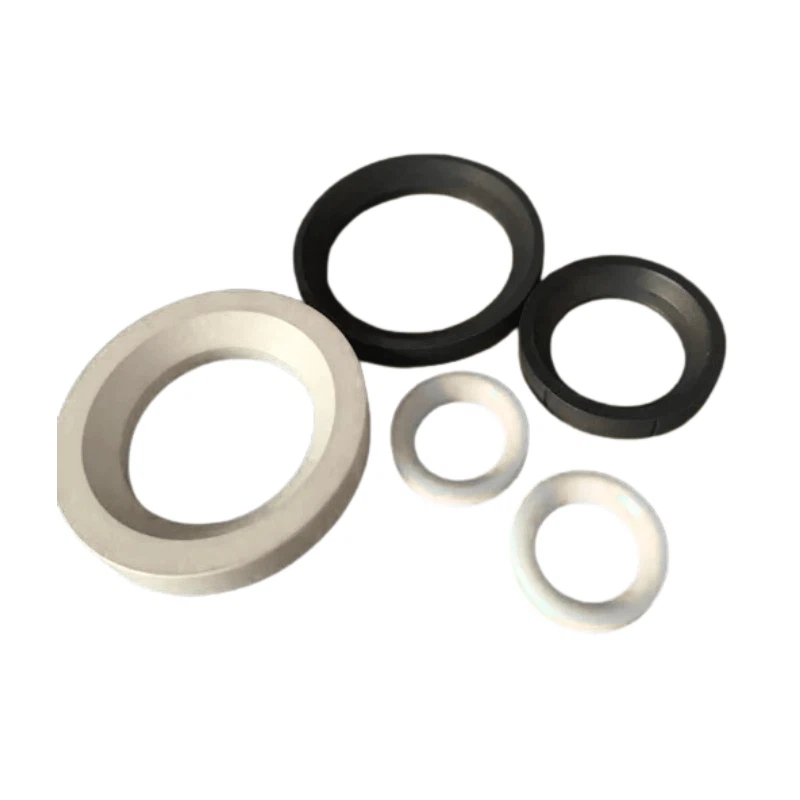

When RPTFE parts are cooled, the molecules in the material slow down and move closer together, causing the part to shrink. This shrinkage can be problematic in applications where tight tolerances are required. For example, in a precision mechanical assembly, the contraction of an RPTFE part could lead to misalignment or interference with other components.
2. Brittleness
Low temperatures can also make RPTFE parts more brittle. At cold temperatures, the polymer chains in RPTFE become less flexible, reducing the material's ability to absorb energy and deform plastically. As a result, the parts are more prone to cracking and fracturing under stress.
In applications where the RPTFE parts are subjected to mechanical loads, such as in bearings or gears, the increased brittleness can lead to premature failure. A small impact or excessive stress that the part could withstand at room temperature might cause it to break at low temperatures.
3. Changes in Mechanical Properties
In addition to brittleness, low temperatures can alter the mechanical properties of RPTFE. The material's modulus of elasticity, which measures its stiffness, typically increases at low temperatures. This means that the RPTFE part becomes stiffer and less compliant.
In some applications, such as seals or gaskets, a certain degree of compliance is required to ensure a proper seal. The increased stiffness at low temperatures can reduce the sealing performance of RPTFE parts, leading to leaks.
4. Interaction with Reinforcements
The reinforcement materials in RPTFE can also be affected by low temperatures. Different reinforcement materials have different coefficients of thermal expansion, and when combined with RPTFE, this can lead to differential contraction.
For example, if the reinforcement material has a lower CTE than the RPTFE matrix, it may not contract as much as the RPTFE when cooled. This can create internal stresses within the part, which can lead to delamination or cracking at the interface between the reinforcement and the matrix.
Mitigating the Effects of Low Temperatures on RPTFE Parts
1. Material Selection
As a supplier, we offer a range of RPTFE materials with different properties. For low - temperature applications, we can recommend materials with lower coefficients of thermal expansion or better low - temperature toughness. By choosing the right material, the dimensional changes and brittleness issues can be minimized.
2. Design Considerations
Proper design can also help mitigate the effects of low temperatures. For example, allowing for some clearance in the design to accommodate thermal contraction can prevent interference between parts. Additionally, using rounded edges and fillets in the design can reduce stress concentrations, which is especially important when the material is more brittle at low temperatures.
3. Surface Treatments
Surface treatments can improve the low - temperature performance of RPTFE parts. For example, applying a coating can reduce the coefficient of friction, which can help reduce the stress on the part during operation. Some coatings can also provide additional protection against environmental factors that may exacerbate the effects of low temperatures.
Comparison with High - Temperature Performance
It's interesting to compare how RPTFE performs at low temperatures with its performance at high temperatures. At high temperatures, RPTFE can experience thermal expansion and a decrease in mechanical properties. You can learn more about RPTFE's high - temperature performance RPTFE High Temperature.
In contrast, at low temperatures, the main issues are thermal contraction and increased brittleness. Understanding these differences is crucial for selecting the right material and design for specific temperature - related applications.
Conclusion and Call to Action
In conclusion, low temperatures can have significant effects on the dimensional stability of RPTFE parts, including thermal contraction, brittleness, changes in mechanical properties, and interactions with reinforcements. However, with proper material selection, design considerations, and surface treatments, these effects can be mitigated.
As a reliable RPTFE Low Temperature RPTFE Low Temperature supplier, we are committed to providing high - quality RPTFE materials and solutions for low - temperature applications. If you are in need of RPTFE parts for low - temperature environments or have any questions about our products, we encourage you to contact us for a procurement discussion. Our team of experts is ready to assist you in finding the most suitable solutions for your specific needs.
References
- "Handbook of Polytetrafluoroethylene (PTFE) and Related Fluoropolymers", William J. Wilkie (Editor), William F. Gorham (Editor).
- "Engineering Plastics: Properties and Applications", Steven M. Kurtz.
- Technical documents and research reports from industry - leading RPTFE manufacturers.


