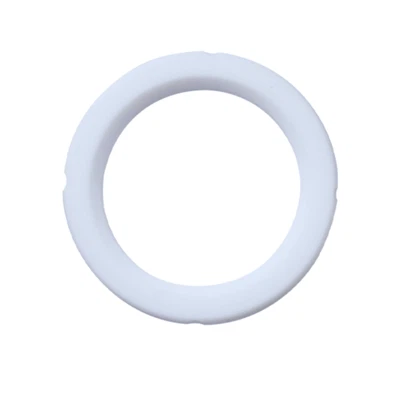
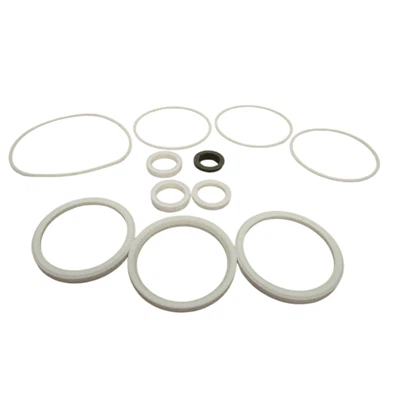
As a trusted supplier of rPTFE seals, I'm excited to take you through the fascinating journey of how these essential components are manufactured. rPTFE, or recycled Polytetrafluoroethylene, is a remarkable material known for its outstanding chemical resistance, low friction, and high-temperature stability. These properties make rPTFE seals ideal for a wide range of applications, from automotive and aerospace to chemical processing and food and beverage industries.


Step 1: Material Selection and Preparation
The first step in manufacturing rPTFE seals is selecting the right recycled PTFE material. We source high-quality recycled PTFE from reliable suppliers, ensuring that it meets our strict quality standards. The recycled PTFE is then carefully inspected and tested to determine its purity, density, and other key properties.
Once the material is selected, it undergoes a thorough cleaning and purification process to remove any contaminants or impurities. This is crucial to ensure the final product's performance and reliability. The cleaning process may involve washing, filtering, and drying the recycled PTFE to remove dirt, debris, and other unwanted substances.
Step 2: Compounding
After the recycled PTFE is cleaned and purified, it is compounded with other additives and fillers to enhance its properties. These additives may include glass fibers, carbon fibers, graphite, or other materials, depending on the specific requirements of the application. The compounding process involves mixing the recycled PTFE with the additives in a high-speed mixer or extruder to ensure a uniform distribution of the additives throughout the material.
The compounding process is carefully controlled to ensure that the final product has the desired properties, such as improved strength, wear resistance, or chemical resistance. The ratio of the recycled PTFE to the additives is also carefully adjusted to achieve the optimal balance of properties for the specific application.
Step 3: Molding
Once the compounded rPTFE material is ready, it is molded into the desired shape using various molding techniques. The most common molding techniques for rPTFE seals include compression molding, injection molding, and extrusion molding.
Compression Molding
Compression molding is a widely used technique for manufacturing rPTFE seals. In this process, the compounded rPTFE material is placed in a mold cavity and heated to a specific temperature under pressure. The heat and pressure cause the material to flow and fill the mold cavity, taking on the shape of the mold. Once the material has cooled and solidified, the mold is opened, and the finished seal is removed.
Compression molding is suitable for manufacturing seals with complex shapes and sizes. It allows for precise control over the dimensions and properties of the final product. However, it is a relatively slow process and may not be suitable for high-volume production.
Injection Molding
Injection molding is another popular technique for manufacturing rPTFE seals. In this process, the compounded rPTFE material is melted and injected into a mold cavity under high pressure. The molten material fills the mold cavity quickly, taking on the shape of the mold. Once the material has cooled and solidified, the mold is opened, and the finished seal is ejected.
Injection molding is a fast and efficient process that is suitable for high-volume production. It allows for the production of seals with consistent dimensions and properties. However, it requires expensive equipment and tooling, and the process may be limited by the size and complexity of the mold.
Extrusion Molding
Extrusion molding is a continuous process that is used to manufacture rPTFE seals with a constant cross-section, such as gaskets and O-rings. In this process, the compounded rPTFE material is fed into an extruder, where it is heated and melted. The molten material is then forced through a die, which gives it the desired shape. The extruded seal is then cooled and cut to the desired length.
Extrusion molding is a fast and efficient process that is suitable for high-volume production. It allows for the production of seals with a consistent cross-section and properties. However, it may not be suitable for manufacturing seals with complex shapes or sizes.
Step 4: Machining and Finishing
After the rPTFE seals are molded, they may undergo further machining and finishing operations to achieve the desired dimensions and surface finish. Machining operations may include cutting, drilling, grinding, or polishing the seals to remove any excess material and to ensure that they meet the required specifications.
Finishing operations may include applying a coating or treatment to the seals to improve their performance or appearance. For example, a lubricant or anti-stick coating may be applied to the seals to reduce friction and wear. A corrosion-resistant coating may also be applied to the seals to protect them from chemical attack.
Step 5: Quality Control
Quality control is an essential part of the manufacturing process for rPTFE seals. At every stage of the manufacturing process, the seals are carefully inspected and tested to ensure that they meet the required quality standards. Quality control measures may include visual inspection, dimensional measurement, material testing, and performance testing.
Visual inspection is used to check for any visible defects or imperfections in the seals, such as cracks, voids, or surface irregularities. Dimensional measurement is used to ensure that the seals have the correct dimensions and tolerances. Material testing is used to verify the composition and properties of the rPTFE material, such as its density, hardness, and chemical resistance. Performance testing is used to evaluate the seals' performance under various conditions, such as temperature, pressure, and chemical exposure.
Step 6: Packaging and Shipping
Once the rPTFE seals have passed all the quality control tests, they are carefully packaged and shipped to our customers. We use high-quality packaging materials to protect the seals during transportation and storage. The packaging may include plastic bags, boxes, or custom-made containers, depending on the size and quantity of the seals.
We also offer a range of shipping options to ensure that our customers receive their orders in a timely and cost-effective manner. We work with reliable shipping carriers to provide fast and reliable delivery services to our customers worldwide.
Conclusion
In conclusion, the manufacturing process for rPTFE seals is a complex and precise process that requires careful attention to detail at every stage. From material selection and preparation to molding, machining, finishing, and quality control, every step is crucial to ensure the final product's performance and reliability.
As a leading supplier of rPTFE seals, we are committed to providing our customers with high-quality products that meet their specific requirements. We use the latest manufacturing technologies and techniques to ensure that our seals are of the highest quality and performance. We also offer a range of customization options to meet the unique needs of our customers.
If you are looking for high-quality rPTFE seals for your application, please contact us today to discuss your requirements. We would be happy to provide you with more information about our products and services and to help you find the right solution for your needs.
References
- "Polytetrafluoroethylene (PTFE): Properties, Applications, and Processing" by John A. Brydson
- "Sealing Technology Handbook" by John H. Bickford
- "Materials Science and Engineering: An Introduction" by William D. Callister Jr. and David G. Rethwisch