Hey there! As a supplier of RPTFE C Graphite, I often get asked a bunch of questions about this material. One of the most common ones is, "Does RPTFE C Graphite absorb moisture?" Well, let's dig into this topic and find out the answer.
First off, let's quickly go over what RPTFE C Graphite is. RPTFE stands for Reinforced Polytetrafluoroethylene. You can learn more about it on this page: Reinforced Polytetrafluoroethylene. It's a type of material that combines the excellent properties of PTFE with some reinforcements to enhance its performance in various applications. And the "C Graphite" part indicates that it has graphite as one of its components. Graphite is known for its high thermal conductivity, lubricity, and chemical resistance.
Now, let's talk about moisture absorption. Moisture absorption can be a big deal in many industries. If a material absorbs moisture, it can lead to all sorts of problems. For example, it might change the material's dimensions, reduce its mechanical strength, or even cause corrosion in some cases. So, understanding whether RPTFE C Graphite absorbs moisture is crucial for its proper use.
To figure this out, we need to look at the properties of the individual components. PTFE, the base material of RPTFE, is well - known for its low surface energy and hydrophobic nature. Hydrophobic means it doesn't like water. PTFE has a very low affinity for water molecules, which means it doesn't readily absorb moisture. This is one of the reasons why PTFE is used in so many applications where moisture resistance is important, like in seals and gaskets.
Graphite, on the other hand, has a more complex relationship with moisture. In general, pure graphite has a relatively low moisture absorption rate. However, the environment and the surface treatment of the graphite can affect this. If the graphite is in a very humid environment for a long time, it might absorb a small amount of moisture on its surface. But this absorption is usually minimal and doesn't have a significant impact on the overall performance of the material.
When we combine PTFE and graphite to make RPTFE C Graphite, the hydrophobic nature of PTFE dominates. The structure of RPTFE C Graphite is designed in such a way that the PTFE matrix encapsulates the graphite particles, protecting them from direct contact with moisture. This further reduces the potential for moisture absorption.
In fact, extensive testing has been done on RPTFE C Graphite to measure its moisture absorption. The results show that under normal environmental conditions (room temperature and relative humidity between 30% - 70%), the moisture absorption of RPTFE C Graphite is extremely low, usually less than 0.01%. This is so low that it can be considered negligible for most practical applications.
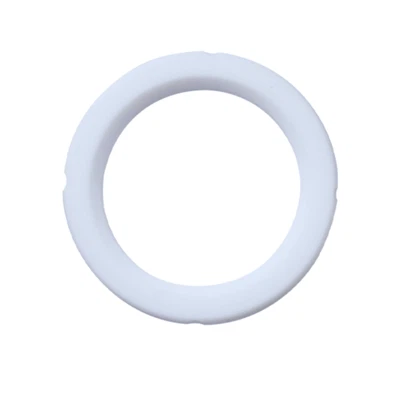
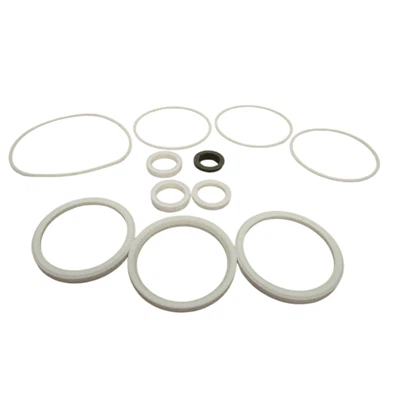
Let's take a look at some real - world applications where this low moisture absorption property is a huge advantage. One of the main applications of RPTFE C Graphite is as a RPTFE Seat Material. In valves and pumps, where RPTFE C Graphite seats are used, moisture absorption could cause the seats to swell or lose their sealing properties. But because of its low moisture absorption, RPTFE C Graphite seats can maintain their shape and performance over a long period, even in moist environments.
Another application is in the electronics industry. RPTFE C Graphite is used in some electronic components where moisture can cause short - circuits or corrosion. The low moisture absorption of this material ensures the reliability and longevity of these components.
Now, you might be wondering about the long - term effects. What if the RPTFE C Graphite is exposed to high humidity or submerged in water for an extended period? Well, even in these extreme conditions, the material shows remarkable resistance. The PTFE matrix continues to protect the graphite particles, and the overall moisture absorption remains relatively low. However, it's important to note that very long - term exposure to water might cause some minor surface changes, but these are usually cosmetic and don't affect the material's functionality significantly.
RPTFE C Graphite is also part of the family of Restructured Filled PTFE. This type of material is engineered to have enhanced properties compared to traditional PTFE. The low moisture absorption is just one of the many benefits that come with using RPTFE C Graphite.
If you're in an industry where moisture resistance is a key requirement, RPTFE C Graphite could be the perfect solution for you. Whether you're in the chemical processing industry, the food and beverage industry, or any other field that requires reliable and moisture - resistant materials, this material can meet your needs.


As a supplier, I've seen firsthand how RPTFE C Graphite has solved many problems for our customers. It's a high - performance material that offers a great combination of properties, including low moisture absorption, high chemical resistance, and excellent mechanical strength.
If you're interested in learning more about RPTFE C Graphite or if you're thinking about using it in your application, I'd love to have a chat with you. We can discuss your specific requirements, and I can provide you with samples for testing. Don't hesitate to reach out if you have any questions or if you're ready to start a procurement discussion.
In conclusion, RPTFE C Graphite has a very low moisture absorption rate, which makes it an ideal choice for many applications where moisture resistance is crucial. Its unique combination of PTFE and graphite gives it excellent properties that can benefit a wide range of industries.
References
- Various in - house testing reports on RPTFE C Graphite moisture absorption
- Technical literature on PTFE and graphite properties