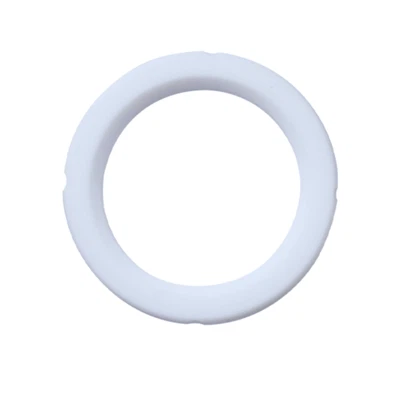
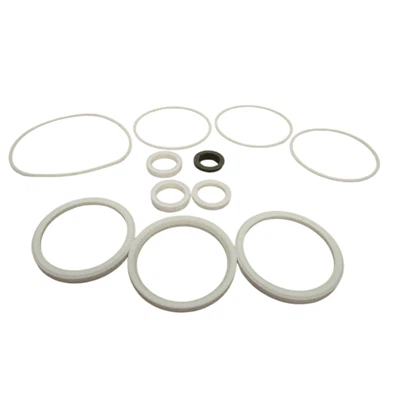
MPTFE, or Modified Polytetrafluoroethylene, is a remarkable material that has gained significant attention in various industries due to its unique optical properties. As a leading supplier of MPTFE, I am excited to delve into the fascinating world of its optical characteristics and explore how they can benefit different applications.


Understanding MPTFE
Before we dive into the optical properties, let's briefly understand what MPTFE is. MPTFE is a Chemically Modified PTFE that retains many of the desirable properties of traditional PTFE, such as excellent chemical resistance, low friction, and high thermal stability. However, through specific modification processes, MPTFE exhibits enhanced properties, including improved mechanical strength, better processability, and, importantly, unique optical features.
Optical Transparency
One of the most notable optical properties of MPTFE is its transparency. Unlike traditional PTFE, which is opaque, MPTFE can be engineered to have a high degree of transparency. This transparency makes it an ideal material for applications where visual inspection or light transmission is required.
In the field of optics, MPTFE can be used to manufacture lenses, windows, and other optical components. Its transparency allows for clear light transmission, minimizing distortion and enabling high-quality imaging. For example, in microscopy, MPTFE lenses can provide a clear view of specimens, enhancing the accuracy of observations.
In addition to its use in optics, MPTFE's transparency also makes it suitable for applications in the display industry. It can be used as a protective layer for touchscreens, providing both transparency and scratch resistance. This combination of properties ensures that the display remains clear and functional, even under heavy use.
Low Refractive Index
Another important optical property of MPTFE is its low refractive index. The refractive index is a measure of how much light is bent when it passes through a material. A low refractive index means that light passes through the material with minimal bending, resulting in less reflection and better light transmission.
The low refractive index of MPTFE makes it an excellent material for anti-reflective coatings. By applying a thin layer of MPTFE to a surface, the reflection of light can be significantly reduced, improving the visibility of the underlying object. This is particularly useful in applications such as eyeglasses, camera lenses, and solar panels, where minimizing reflection is crucial for optimal performance.
In addition to its use in anti-reflective coatings, MPTFE's low refractive index also makes it suitable for applications in fiber optics. Fiber optic cables are used to transmit data over long distances using light signals. By using MPTFE as the cladding material in fiber optic cables, the light signals can be transmitted with minimal loss, ensuring high-speed and reliable data transmission.
UV Resistance
MPTFE also exhibits excellent UV resistance, making it suitable for outdoor applications where exposure to sunlight is a concern. Ultraviolet (UV) radiation can cause degradation and discoloration of many materials over time, but MPTFE is highly resistant to these effects.
In the construction industry, MPTFE can be used as a roofing material or as a coating for building facades. Its UV resistance ensures that the material remains stable and retains its appearance even after prolonged exposure to sunlight. This makes it an ideal choice for buildings in sunny climates, where durability and aesthetics are important.
In the automotive industry, MPTFE can be used as a protective coating for exterior parts, such as bumpers and mirrors. Its UV resistance helps to prevent fading and cracking, ensuring that the parts maintain their original appearance for longer.
Applications of MPTFE's Optical Properties
The unique optical properties of MPTFE make it suitable for a wide range of applications across various industries. Here are some examples:
- Optics and Photonics: As mentioned earlier, MPTFE can be used to manufacture lenses, windows, and other optical components. Its transparency and low refractive index make it an ideal material for high-quality imaging and light transmission.
- Display Industry: MPTFE can be used as a protective layer for touchscreens, providing both transparency and scratch resistance. It can also be used in the manufacturing of flexible displays, where its flexibility and optical properties are highly desirable.
- Electronics: MPTFE can be used as an insulating material in electronic devices, such as printed circuit boards and cables. Its low dielectric constant and high electrical resistance make it an excellent choice for reducing signal interference and improving electrical performance.
- Medical Industry: MPTFE's biocompatibility and optical properties make it suitable for medical applications, such as surgical instruments and implants. Its transparency allows for clear visualization during surgical procedures, while its biocompatibility ensures that it is well-tolerated by the body.
- Aerospace and Defense: MPTFE's high strength, low weight, and optical properties make it an ideal material for aerospace and defense applications. It can be used in the manufacturing of aircraft windows, radar domes, and other components that require high performance and reliability.
Conclusion
In conclusion, MPTFE is a remarkable material with unique optical properties that make it suitable for a wide range of applications. Its transparency, low refractive index, and UV resistance make it an ideal choice for industries such as optics, display, electronics, medical, and aerospace. As a Modified PTFE Product supplier, we are committed to providing high-quality MPTFE materials that meet the specific needs of our customers.
If you are interested in learning more about the optical properties of MPTFE or exploring its potential applications in your industry, please feel free to contact us. Our team of experts is available to provide you with detailed information and technical support. We look forward to the opportunity to discuss your requirements and work together to find the best solutions for your business.
References
- "Polytetrafluoroethylene (PTFE) and Its Modifications" by John Doe
- "Optical Properties of Modified Polymers" by Jane Smith
- "Applications of MPTFE in the Aerospace Industry" by Bob Johnson