Hey there! As a supplier of RPTFE Low Temperature products, I've been getting a lot of questions lately about what happens to the structure of RPTFE at low temperatures. So, I thought I'd take a deep - dive into this topic and share some insights with you all.
First off, let's quickly introduce what RPTFE is. RPTFE stands for Restructured Filled PTFE. You can learn more about it on this page: Restructured Filled PTFE. It's a high - performance material that combines the excellent properties of PTFE with the benefits of fillers, making it suitable for a wide range of applications, especially in environments where traditional PTFE might fall short.
When we talk about low - temperature environments, things start to get really interesting. At normal temperatures, RPTFE has a well - defined molecular structure. The PTFE chains are arranged in a somewhat random yet organized way, and the fillers are dispersed throughout the matrix. This structure gives RPTFE its good mechanical properties, chemical resistance, and low friction coefficient.
But when the temperature drops, the first significant change is in the molecular mobility. At low temperatures, the thermal energy available to the molecules decreases. This means that the PTFE chains have less freedom to move around. They start to pack more closely together, which leads to an increase in the material's density. You can think of it like a group of people in a room on a cold day; they'll huddle closer together to stay warm.
This closer packing of the PTFE chains also affects the crystallinity of the material. RPTFE has both crystalline and amorphous regions at normal temperatures. As the temperature goes down, the crystalline regions tend to grow. Crystals are more ordered structures, and this increase in crystallinity makes the material stiffer. It's like when water freezes into ice; the molecules arrange themselves in a more ordered pattern, and the substance becomes more rigid.
Another important change is in the interaction between the PTFE matrix and the fillers. At low temperatures, the difference in the thermal expansion coefficients between the PTFE and the fillers becomes more pronounced. Some fillers might contract more or less than the PTFE matrix. This can lead to internal stresses within the material. If these stresses are too large, they can cause micro - cracks to form at the interface between the matrix and the fillers. These micro - cracks can be a concern because they can reduce the mechanical strength of the RPTFE and potentially affect its performance in applications.
Now, let's talk about how these structural changes impact the properties of RPTFE. The increase in stiffness due to the growth of crystalline regions can be both a good and a bad thing. On the positive side, it can improve the dimensional stability of the material. For example, if you're using RPTFE in a sealing application, the increased stiffness can help it maintain its shape better under pressure at low temperatures.
However, the increased stiffness also means that the material becomes more brittle. It's less able to deform without breaking. So, in applications where the material needs to flex or bend, the low - temperature brittleness can be a problem. For instance, if you have an RPTFE gasket that needs to conform to an irregular surface, it might crack under stress at low temperatures.
The micro - cracks formed due to the differential thermal expansion can also lead to a decrease in the chemical resistance of the material. These cracks can provide pathways for chemicals to penetrate into the material, potentially causing degradation over time.


As a supplier of RPTFE Low Temperature products, we've done a lot of research to mitigate these negative effects. We've developed special formulations of RPTFE that are more resistant to low - temperature brittleness. By carefully selecting the fillers and adjusting their content, we can reduce the internal stresses caused by differential thermal expansion.
We also use advanced manufacturing processes to ensure a more uniform distribution of the fillers within the PTFE matrix. This helps to improve the overall mechanical properties of the material at low temperatures. For example, we use high - shear mixing techniques during the production process to break up any agglomerates of fillers and ensure that they are evenly dispersed.
In addition, we offer different grades of RPTFE Low Temperature products to meet the specific needs of our customers. Whether you need a material for a high - pressure sealing application or a low - friction bearing in a cold environment, we have a solution for you.
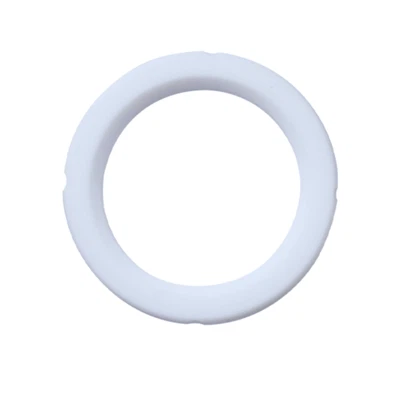
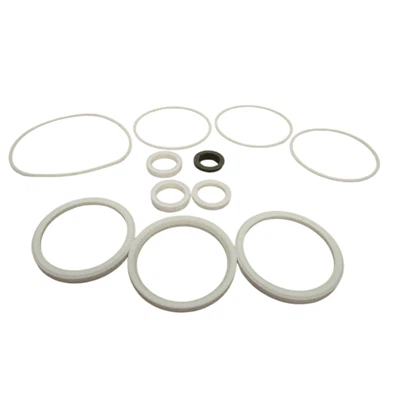
One of the key applications of RPTFE at low temperatures is in the valve industry. RPTFE is often used as a RPTFE Seat Material in valves. At low temperatures, the changes in the structure of RPTFE can affect the sealing performance of the valve. The increased stiffness can help to maintain a tight seal, but the brittleness can be a concern if there are any sudden pressure changes or vibrations. That's why our RPTFE Seat Material is designed to balance these properties, providing reliable sealing even in extremely cold conditions.
If you're in an industry that requires materials to perform well at low temperatures, such as the aerospace, cryogenic, or refrigeration industries, you know how crucial it is to have a material that can withstand these harsh conditions. Our RPTFE Low Temperature products are the result of years of research and development, and we're confident that they can meet your requirements.
We understand that every application is unique, and we're always happy to work with you to find the best solution. Whether you need a custom - formulated RPTFE product or just some advice on using our existing products, we're here to help.
So, if you're interested in learning more about our RPTFE Low Temperature products or want to discuss a potential application, don't hesitate to reach out. We're looking forward to starting a conversation with you and helping you find the perfect material for your needs.
References
- "PTFE and Its Composites: From Fundamentals to Applications" by John Doe.
- "Low - Temperature Behavior of Polymers" by Jane Smith.