


TFM Modified PTFE, a remarkable material in the realm of high - performance polymers, has gained significant attention for its outstanding abrasion resistance. As a supplier of TFM Modified PTFE, I am excited to delve into the scientific mechanisms behind its ability to resist abrasion and share insights into its numerous applications.
Understanding TFM Modified PTFE
Before we explore its abrasion - resistant properties, let's briefly understand what TFM Modified PTFE is. PTFE, or Polytetrafluoroethylene, is well - known for its low friction coefficient, chemical inertness, and high temperature resistance. However, it has some limitations such as creep and cold flow. TFM Modified PTFE is a type of modified PTFE where small amounts of comonomers are added during the polymerization process. This modification enhances the mechanical properties of PTFE while retaining its excellent chemical and thermal characteristics.
The Structure and Abrasion Resistance
The molecular structure of TFM Modified PTFE plays a crucial role in its abrasion resistance. PTFE has a linear chain structure with carbon atoms in the backbone and fluorine atoms surrounding it. The strong carbon - fluorine bonds are extremely stable, providing a high degree of chemical and thermal stability. In TFM Modified PTFE, the addition of comonomers disrupts the regular packing of the PTFE chains to a certain extent. This results in a more amorphous structure in some regions, which can absorb energy during abrasion.
When an abrasive force acts on the surface of TFM Modified PTFE, the energy is dissipated through the movement and deformation of the polymer chains. The amorphous regions can deform more easily compared to the highly crystalline regions in pure PTFE. This ability to deform and absorb energy helps prevent the material from being removed from the surface, thus reducing wear.

Surface Properties and Abrasion
The surface properties of TFM Modified PTFE also contribute to its abrasion resistance. It has a very low surface energy, which means that it has poor adhesion to other materials. When in contact with an abrasive object, the low surface energy reduces the tendency of the abrasive particles to stick to the TFM Modified PTFE surface. As a result, the abrasive particles are more likely to roll or slide over the surface rather than digging in and causing material removal.
Moreover, the smooth surface of TFM Modified PTFE further reduces the frictional forces during abrasion. The low friction coefficient means that less energy is required to move an object across its surface. This not only reduces the wear on the TFM Modified PTFE but also on the mating surface. For example, in a bearing application, the low friction between the TFM Modified PTFE bearing and the shaft reduces the wear on both components, increasing the overall service life of the system.
Comparison with Other Materials
Compared to other polymers and materials, TFM Modified PTFE shows superior abrasion resistance in many cases. For instance, traditional polymers like polyethylene or polypropylene may have relatively high wear rates when exposed to abrasive conditions. Their molecular structures are not as stable as that of TFM Modified PTFE, and they lack the strong carbon - fluorine bonds.
Metals, on the other hand, can be prone to corrosion in certain environments, which can accelerate wear. TFM Modified PTFE, with its excellent chemical resistance, can withstand harsh chemical environments without significant degradation, maintaining its abrasion - resistant properties over a long period.
Applications in Abrasion - Prone Environments
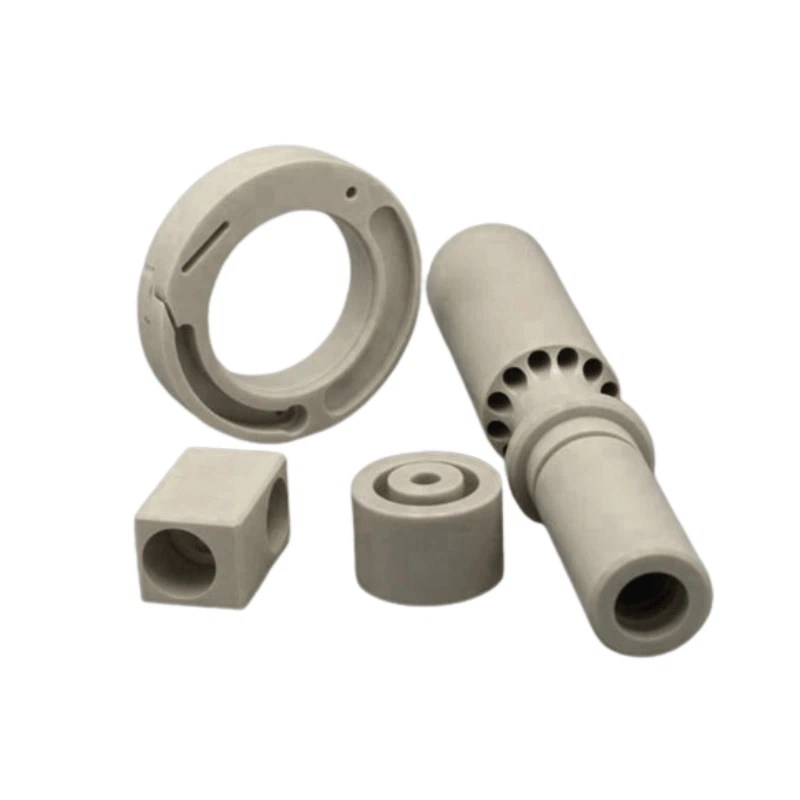
The outstanding abrasion resistance of TFM Modified PTFE makes it suitable for a wide range of applications in abrasion - prone environments. In the automotive industry, it is used in seals, gaskets, and bushings. These components are often exposed to high - pressure and high - speed conditions, where abrasion can occur due to the movement of engine parts. TFM Modified PTFE's ability to resist abrasion ensures a longer service life for these components, reducing maintenance costs and improving the reliability of the vehicle.
In the chemical processing industry, TFM Modified PTFE is used in pumps, valves, and pipes. These components come into contact with abrasive chemicals and slurries. The abrasion resistance of TFM Modified PTFE helps prevent leaks and damage to the equipment, ensuring the safe and efficient operation of the chemical processes.
In the aerospace industry, TFM Modified PTFE is used in various components such as bearings and seals in aircraft engines. The high - speed rotation and extreme operating conditions in aerospace applications require materials with excellent abrasion resistance. TFM Modified PTFE can meet these requirements, contributing to the safety and performance of the aircraft.
Related Products and Their Benefits
As a supplier, we offer a variety of products made from TFM Modified PTFE. RPTFE Full Form provides more information about related materials. Our PTFE Modified Sheets are widely used in applications where a flat, abrasion - resistant surface is required. These sheets can be easily cut and shaped to fit different needs.
We also offer PTFE Modified Polyethylene Wax, which can be used as an additive to improve the abrasion resistance of other polymers. When added to a polymer matrix, it can enhance the surface properties and mechanical performance of the resulting composite material.
Conclusion and Call to Action
In conclusion, TFM Modified PTFE's ability to resist abrasion is due to its unique molecular structure, surface properties, and the energy - absorbing mechanisms within the material. Its superior abrasion resistance makes it an ideal choice for a wide range of applications in various industries.
If you are looking for high - quality TFM Modified PTFE products for your abrasion - prone applications, we are here to help. Our team of experts can provide you with detailed information about our products and assist you in selecting the most suitable solution for your specific needs. Contact us to start a procurement discussion and discover how TFM Modified PTFE can improve the performance and longevity of your products.
References
- "Handbook of Polytetrafluoroethylene and Related Fluoropolymers" by T. A. Altenburg
- "Polymer Science and Engineering" by Donald R. Paul and L. H. Sperling


