Hey there! As a supplier of MPTFE (Modified Polytetrafluoroethylene), I've been getting a lot of questions lately about how MPTFE viscosity changes with temperature. So, I thought I'd take a deep dive into this topic and share some insights with you all.
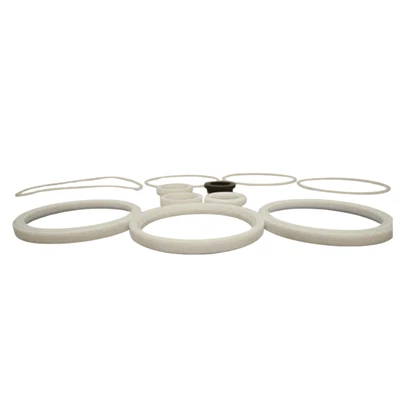
First off, let's quickly go over what MPTFE is. MPTFE is a high - performance material that combines the excellent chemical resistance, low friction, and non - stick properties of PTFE with some modifications to enhance its performance in various applications. It's used in a wide range of industries, from aerospace to automotive, and even in valve applications. You can check out more about our MPTFE Seat Material and Modified PTFE EZ on our website.


Now, let's talk about viscosity. Viscosity is a measure of a fluid's resistance to flow. In the case of MPTFE, which is often in a semi - molten or molten state during processing, understanding how its viscosity changes with temperature is crucial for manufacturers.
At lower temperatures, MPTFE has a relatively high viscosity. This is because the polymer chains are more tightly packed and have less mobility. Think of it like a thick syrup. The molecules are close together, and it takes a lot of force to make them move past each other. When we start to heat up MPTFE, the thermal energy causes the polymer chains to gain more kinetic energy. As a result, they start to move more freely, and the viscosity begins to decrease.
As the temperature rises further, the decrease in viscosity becomes more significant. The polymer chains start to slide past each other more easily, and the material becomes more fluid. This is a critical factor in manufacturing processes such as injection molding or extrusion. For example, in injection molding, a lower viscosity at higher temperatures allows the MPTFE to flow more easily into the mold cavities, resulting in a more accurate and detailed final product.
However, there's a limit to how much we can increase the temperature. If we heat MPTFE too much, it can start to degrade. The polymer chains can break down, leading to a loss of mechanical properties and potentially causing issues in the final product. So, finding the right temperature range is essential.
In general, the relationship between MPTFE viscosity and temperature can be described by an exponential - like curve. At first, as the temperature increases from a low starting point, the viscosity drops gradually. Then, as we approach a certain critical temperature range, the viscosity drops more rapidly. And if we go beyond that range, the material can start to have problems.
Let's take a look at some real - world implications of this temperature - viscosity relationship. In valve applications, the MPTFE seat material needs to have the right viscosity at the operating temperature. If the viscosity is too high, it may not form a proper seal, leading to leakage. On the other hand, if the viscosity is too low, the material may deform under pressure, also causing sealing issues. That's why it's so important to understand how the viscosity changes with temperature and select the appropriate MPTFE grade for the specific application.
Our Modified PTFE Product is designed to have a well - controlled viscosity - temperature relationship. We've spent a lot of time researching and developing our products to ensure that they perform optimally in different temperature conditions. Whether you're working in a high - temperature environment or a low - temperature one, we have an MPTFE solution for you.
Now, if you're in the market for MPTFE and want to learn more about how our products can meet your specific needs, don't hesitate to reach out. We're here to help you find the right MPTFE grade for your application, taking into account factors like temperature, pressure, and chemical exposure. We can also provide you with samples so you can test our products in your own environment.
In conclusion, understanding how MPTFE viscosity changes with temperature is crucial for anyone working with this material. It affects everything from the manufacturing process to the performance of the final product. As a supplier, we're committed to providing high - quality MPTFE products that are tailored to your specific requirements. So, if you have any questions or are interested in purchasing MPTFE, just get in touch, and we'll be happy to assist you.
References:
- Textbooks on polymer science and engineering
- Internal research and development reports from our company